Compare and contrast: The 4 day work week.

So there’s a pointer to this Inc. article in my inbox this morning. I don’t need any convincing about the potential for a company to form its own work schedule. But it seems to me that this article is lying, or the author is fooling himself, or worse, he’s taking advantage of his employees. To wit: The Case for a Four-Day Work Week

The extra time for research makes for a well-informed team and the realization they have something unique.

So they work 40 hours in 4 days. But then, they get to do research on their “day off”. Huh? How is that helping? I realize that they can run errands and do other things at home since their not expected in the office, and mot likely do not have to answer email, the phone etc. But this smacks of creating a 48 hour work week to me. Either include the research in the work week (“Hey, I need my people to keep up!”) or crow to Inc. magazine how you you fooled your employees into a 48 hour work week and here’s how. Or, one more possibility, no one’s doing anything significant for the company on that day and he knows it. Which makes the article a lie about the benefits of time for research.

Now compare that to how Jason Fried talks about the topic of his company’s schedule:

I don’t believe in the 40-hour workweek, so we cut all that BS about being somewhere for a certain number of hours. I have no idea how many hours my employees work — I just know they get the work done.

Only half the people in the company lives in the area where they could possibly come into the office. But there’s no requirement to at all. They don’t track hours because that’s not the goal. The goal is getting stuff done. I’ll bet there are weeks where people work many more than 40 hours, and times when they work less. Does it matter? Being home to “meet the plumber” shouldn’t be a benefit, but common sense. Not being able to schedule appointments and handle the trivia of life adds enormous stress to people. Do you want a bunch of stressed out, unfocused, people working with you? (do you think the leak held? No shower this morning, gah. etc. throughout the day) Do you want to create an environment where people consider lying as a time management strategy? (Hmm, I should call in sick so I can take care of this.)

Anyway, regardless of whether any of this works for you or your company try not to use it as a means of extending the work week rather than embracing the real benefits.


Wunda’s World: Clarifying purpose

Wunda’s World: Clarifying purpose:

How can we do this? By understanding and buying into what we are creating and how we see it experienced. We can create a mission, vision and values to clarify and create distinction.

The mission statement is all about purpose. Its about the problem you are trying to solve, the information you are trying to share and/or the service you are trying to provide. Its about the long term goals.

On the other side, the vision statement is an abstraction of the experience. It can include words like fun, simple, quality, quickly, stable, reliable, responsive, etc. It does not include ideas like color schemes, mechanics, technology specifics or other implementation details.

Time can also be spent on value statements (users own their information, we strive to directly connect with and respond to user feedback, all user feedback is valid, etc)

Continue drilling down into these ideas until everyone knows what they are doing, are excited to work towards the goals and know in their hearts they are working on an effort they accept fully.

For new teams, taking time to manifest an understanding of team dynamics, quality and creativity with as much openness and honesty as possible can help ensure the best “good-enough” software gets created in a way that is enjoyable, sustainable and collaborative.

Finally, read these statements every morning. When discussions become long, unclear or hostile, refer back to them. Use them as a method to stay detached to what is no longer serving and focused on the underlying issues.

[Well said!]

Busy Developers Guide: CoffeeScript

Please note that these instructions are for busy developers, and assume that you are one. If so, this should help, if you’re not, these may not. Sorry about that. Below are the steps I used…

  1. First get npm (the node package manager).
  2. You’ll find a one line install such as this or similar: curl http://npmjs.org/install.sh | sh
  3. Next CoffeeScript: npm install -g coffee-script (Leave off the -g if you don’t wish to install globally.)
  4. Assuming that went well you should be able to type “coffee” on the command line and see a "coffee>" prompt.
  5. Pat yourself on the back and start developing! But wait, a little more structure might help… You can skip the steps below and check out the repository.
  6. Create a new folder and get it set up as a repository. For me that looks something like this: mkdir ~/code/learning_coffeescript; cd ~/code/learning_coffeescript; git init;
  7. Create some files a bit of structure. A top level public directory and src directory. Inside public I created a lib dir and an index.html file.
  8. The index.html file contains a base html 5 template, and in my learning case it included a line pointing to the hosted jquery.js lib, and our newly compiled javascript file (yeah, I know, patience… I’ll get to it in a minute.)
  9. Back in the terminal, at your project root, type coffee -o public/lib -cw src which will compile all the CoffeScript files written in src into javascript in lib. It is “watching” the src files timestamps so if you update and save a file it will recompile.
  10. Assuming you’ve got everything wired up correctly, you can fire up a browser, open the index.html file and go to town.
  11. If you want to get snazzy you can rackup file_server.ru -p 1111 and the project will run under a basic Rack file server.
  12. If you wish to be all hip and edgy you can download and install Pow, symlink your local clone of the repository and develop to your hearts content.

Feel free to make pull requests, or send me issues, updates, or notes. I’m sure I have a lot to learn about CoffeeScript how best to integrate it with jQuery, etc. In the end though, I’m enjoying the syntax. It was just not clear how to get a project going. Next I’ll be looking at testing…

The week in links (08/11)

Tech and design links

Redis in Practice: Who’s Online?

Redis in Practice: Who’s Online?: Redis is one of the most interesting of the NOSQL solutions. It goes beyond a simple key-value store in that keys’ values can be simple strings, but can also be data structures. Redis currently supports lists, sets and sorted sets. This post provides an example of using Redis’ Set data type in a recent feature I implemented for Weplay, our social youth sports site.
Where […] [Nicely done. You should include the cron job!]
Source: Luke Melia

This year’s favorite things

In the tech category, Rails 2.3, Redis, and the Engine Yard Cloud. offerings have got to top the list of things that improved our ability to deliver products and simplified solutions for us. Github also tops my list of services that have become a way of life. The tech world spins quickly though. Curious to see what’s next. In all cases though, it’s not the tech or the code but the people. All these projects or companies have seriously dedicated people working on them. *That* is what makes these things go. Rock on people.

Quoc Pham fixed shoes
Rapha scarf, Patagonia Nano Puff Pullover
Outlier Black Empire Tee
Stormy Kromer shirt
Rapha Lightweight Softshell
Panache Cycling Houndtooth socks
Outlier hoodie
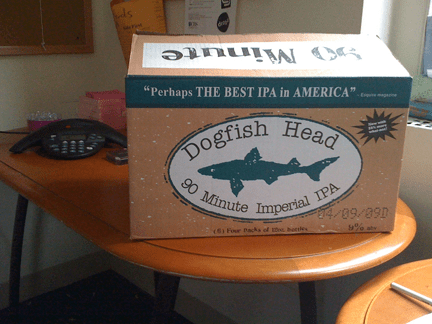
dogfishhead 90 minute IPA
jeff jones silver headbadge
hed ardennes
king cages ti water bottle cages
harriman local loop
Chris King ISO Hubs
Starting line with Team Fatty at the Livestrong Challenge Philly
Fall riding rocks
Mad Alchemy Mango Love
Taza Chocolate Mexicana helping the dev team persevere
Laying down some fresh tracks in the snow

There might be a few more… time will tell.

Experience and thoughtfulness

Some people will never be considered “experienced”. To become experienced, one must reflect upon experiences and attempt to draw understanding from them. “This didn’t work out, this did. Hmmm? Why is that?” Failure to inspect our experiences leads no where.

You can also get ahead of the curve. “What do I think I should do in this situation? What am I capable of doing? where do they intersect? What does this more experienced and or capable person think? Does that change anything significant?” This is the nature of thoughtfulness.

So with these two simple notions at hand explain to me dear reader why no one pulled through on my ride this morning for over a 10 mile stretch into a headwind? I waved, I pulled out, I slowed… nothing. It’s was like watching one of the TDF breakaways falls apart where it has become everyone for themselves. Ya know, the guys in back never pull through? I would pull out and slow, everyone else would slow. I’d pull out and wave… nothing. Slowly extremely would bring questions of “Are you OK?”. Sigh. I’m fine. Keep pedaling! There was no reason someone else couldn’t stick their nose in the wind. A couple of folks were clearly being lazy, they had no problem sprinting ahead when they felt motivated. Quite a few had no problem pulling when we turned and the wind was longer in our faces. A couple of folks were probably inexperienced and haven’t been taught proper etiquette. Hopefully, they’ll go home and wonder about these moments and at least think “What was that about?”

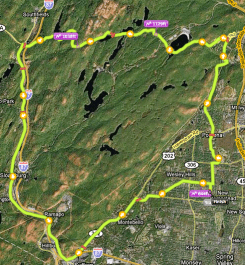
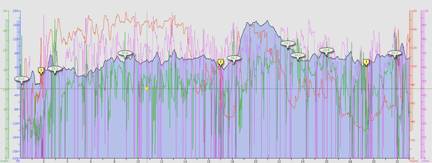
ride_with_sheryl.png

33 miles, almost 1000ft of climbing, an average speed of 13.4 that is really a lie ( well no, it’s not in the sense that I’m sure it is the average for all movement on the ride, but that includes the dinkying around the parking lots and city streets… so I pawed through the graph for the “on the road sections” and sure enough even the uphill averages were over 15 with some sections in the low 20’s.

The next annoyance was when I realized that a so called “expert”, an expert by virtue of nothing more than experience, put my wife’s bike rack together wrong, with some critical parts installed backward. My analysis is that in this case the person hasn’t built many of this model rack, and it was a misreading of the instructions, but I was surprised at how things went when I tried to put a bike on the rack. Something was wrong, but I couldn’t put my finger on it. Yesterday I saw a picture of the same rack and in just one second it became clear which parts had been installed wrong, and now it all makes far more sense, and works properly. The failure here is that someone who should be used to this (the so called expert) rushed the job. He should be used to working with customers waiting, he does it all the time. I was in no particular rush, and wasn’t hovering (on purpose). So it’s just sloppiness.

We can make a choice about the quality and nature of our work. We can be present and demand a level quality that we will not forego. To me it is essential to constantly be aware of this. I don’t always get to work to the quality level I wish, there are other constraints on my work such as time, cost, and my own ability to execute. What I cannot and do not give up is the awareness of those decisions, how they are made and why, and allow some lesser level than I desire become assumed and routine. I am aware of my decisions, my experience, and I will not release my thoughtfulness to the best of my ability.

Laurence Gonzales Everyday Survival: How to Survive (Almost) Anything

How to Survive (Almost) Anything: Take tasks that require no thought and re-invent them so that you have to think. This bears repeating: Survival is not about equipment and training alone. It’s about what’s in your mind and your emotional system. Living in a low-risk environment dulls our abilities. We must make a conscious effort to learn new things, to force ourselves out of our comfort zones. [This applies to so many things… despite our deep desire to create continuity in our lives, it is best for us if things keep changing and we keep learning and adapting. It’s better from almost every view point I can think of (diet, exercise, thought, etc., etc.) It’s the same lesson I learned as a musician years ago. Adaptation is something that can be practiced.]