What the iPad changed

Not that long a go a “workstation” implied an integrated effort. Hardware and Operating System engineered by the same company which ensured a more seamless experience. There have been many companies that have produced these integrated efforts including Sun and Apple.

Certainly the out of box experience of Lisa’s iMac was exceptional The unit was unboxed. The power cord was attached to the back and the wall. The power button was pushed. The computer suggested putting the batteries in to the wireless mouse and keyboard and connected them to the system when that was complete, and a few clicks later Lisa was ready to get to work. One wire. If only Shipstone existed outside of Heinlein books.

That experience, as great as it is diminishes over time. Why? Because after all that is over, it’s still a computer. You have apps to install, files in a file system, bookmarks in multiple browsers etc. Essentially, all the baggage of computing that has accrued over the last 25 years or so.

The iPad is yet another step along the path of washing all that away. Many of us are used to a near continuous connection to the nets. Many of us have storage “in the cloud” that makes our work available where ever, whenever. The IPad hides the OS, it hides the file system, it hides the computer. It make software as much of an appliance as the hardware has become. It seems, while you use it, do only do one thing. As if at that moment it’s nothing more than a email device. Or a “todo” list. Or a spreadsheet.

Once again it’s about simplicity. It’s about making choices as a designer, having an opinion about what’s needed, for whom and when. Will it be all things to all people? Of course, not. But it could well be a device for many people for much of the time. And easier and more convenient to use than a laptop or desktop computer. We’ll see.

hero_20100127.jpg

Frame source

When most people think of snow and bikes it looks like this:


Or maybe even as below for some very dedicated folks who love biking and winter.

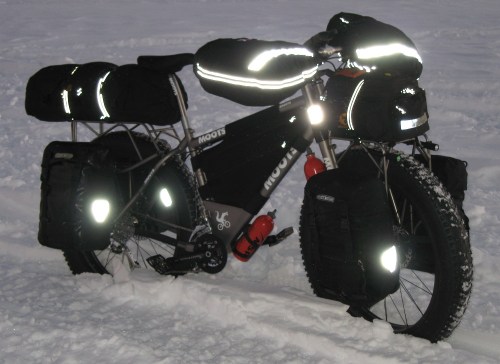
But for Mike Curiak, it looks like this:

snxc 006e.jpg

There’s a lot about this very special bike that you can’t know from first glance. For example, the frame tubes attach to a “gas can” to fuel a stove. You can see the “tank” with the Moots gator on it over the cranks. Lots of other cool stuff. Why? Because Mike doesn’t just go for a ride in the snow. Mike is a legend in endurance biking circles.

He has competed in the Iditabike for the past 10 years, winning the 350 mile version once and the 1,100 mile race twice. He holds the course record for the northern route (the race alternates between two different routes every year). He also holds the record for the Great Divide Race from Canada to Mexico along the Continental Divide. Until last year, he was the record-holder for the Kokepelli Trail Race, pedaling between Moab and Grand Junction in just under 14 hours.

Back in 2007 of the Iditarod Train Invitational he said “Last year was brutal — the highest temperature I saw during the entire race was 26 below.” High of 26 below? Hmmm. That takes preparation. This isn’t the time to discuss unsupported wilderness adventure, backwoods riding, or long distance riding. Suffice it to say that Mike knows a thing or two about it.

Here’s a video of his tour of the Iditarod Trail, Knik Lake to McGrath in early March 2009. and ova heya is timeline of his snow bikes and their evolution so far. [An aside: Eric Parsons designs and sews the gear you see on the snow bikes. Eric adventures pretty hard as well but when not he runs Epic Designs. You can custom order stuff with measurements, or go with stock stuff, or design whatever you need for your adventures. I haven;t ordered from Eric, although we’ve talked about a few things. Another excellent choice is Jeff Boatman’s Carousel Design Works. I have one of Jeff’s Escape Pods. Bomb proof. One of the great features of all three gents is that the designs are informed by doing. In their own adventures they depend on the stuff they design and in the cases of the bags sew and build. Rubber to the road people, rubber to the road.]

And while he doesn’t sew bags when he’s not out adventuring Mike runs a shop called Big Wheels where he specializes in hand built wheels for your 29er. He’s thorough, has no need to build “boutique” wheels to help you spend money (but can if you wish), and will recommend rims, hubs, spokes that match what you tell him about your riding, what you plan for the wheels, your weight etc. Go order a set. You’ll be happy as a clam I tell you what.

You might recall that I said I was perusing someone’s blog and they started posting pictures of a new bike they built. So clearly that person was Mike. And it actually starts a bit further back than that. The bike was delivered on Friday Nov. 2nd 2007. And the first ride pics the following Tuesday. But those pics weren’t really enough to peak my attention. The pictures of the built bike however inspired me to write to Mike and ask some questions. That was in February. And it wasn’t too much longer before there were ride pictures. Oh my.

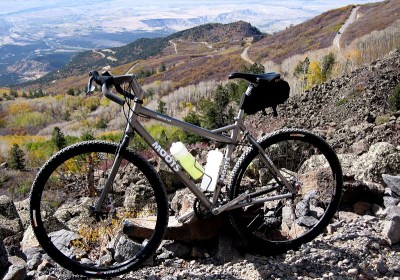
So this frame sits in a work stand ready to be built. I have two sets of Mike’s wheels and a set of Billy’s wheels to choose from (at the moment they’re rubbered as fat, middle, road). Next week I’ll order the missing parts and get busy. That’ll be the next installment.

mfrd 017c.jpg

Lastly, since many of you do ride in the winter, and a common discussion is cold feet and footwear. Have a look at what Mike’s system: Warm feet are happy feet.

This year’s favorite things

In the tech category, Rails 2.3, Redis, and the Engine Yard Cloud. offerings have got to top the list of things that improved our ability to deliver products and simplified solutions for us. Github also tops my list of services that have become a way of life. The tech world spins quickly though. Curious to see what’s next. In all cases though, it’s not the tech or the code but the people. All these projects or companies have seriously dedicated people working on them. *That* is what makes these things go. Rock on people.

Quoc Pham fixed shoes
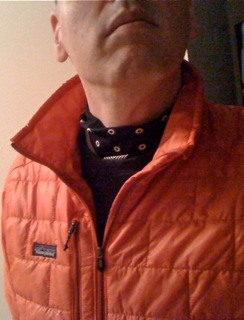
Rapha scarf, Patagonia Nano Puff Pullover
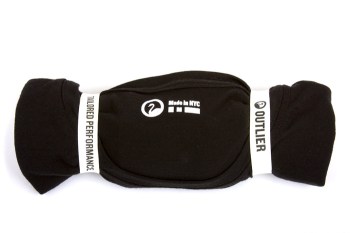
Outlier Black Empire Tee
Stormy Kromer shirt
Rapha Lightweight Softshell
Panache Cycling Houndtooth socks
Outlier hoodie
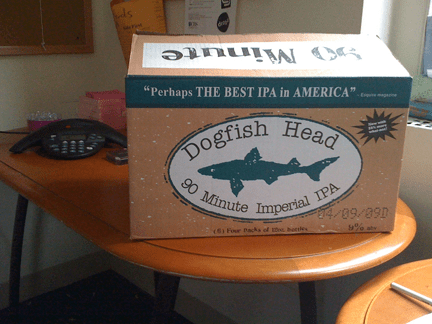
dogfishhead 90 minute IPA
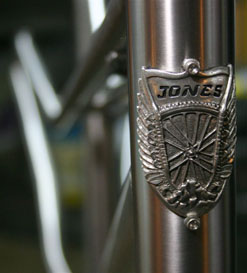
jeff jones silver headbadge
hed ardennes
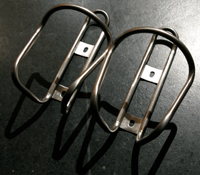
king cages ti water bottle cages
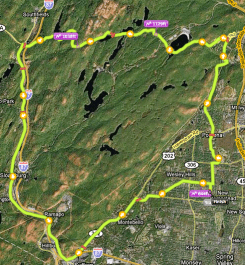
harriman local loop
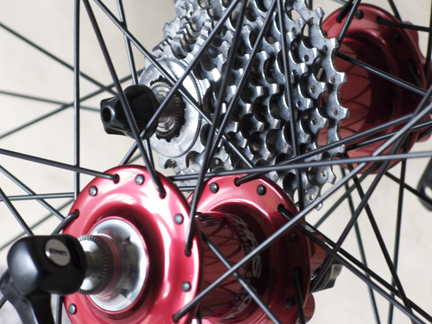
Chris King ISO Hubs
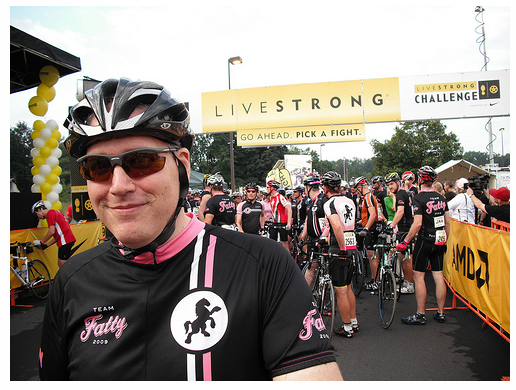
Starting line with Team Fatty at the Livestrong Challenge Philly
Fall riding rocks
Mad Alchemy Mango Love
Taza Chocolate Mexicana helping the dev team persevere
Laying down some fresh tracks in the snow

There might be a few more… time will tell.

Weaving and patterns courtesy of Turnbull & Asser

Too many questions yesterday… so for those who asked questions better asked of the interwebs and someone who knows something…I filched expertise from Turnbull & Asser:

Warp and Weft: All weaves are made up from Warp and Weft ‘yarns’. Warp ‘yarns’ run along the length of the material, whilst weft ‘yarns’ run across the width of the material. It is the different methods of interlacing the warp and weft ‘yarns’ that create a particular type of weave. Many of the most common weaves have acquired names that come down to us over the centuries.

Brief Glossary of Weaving Terms

  • Float: A float is created when a warp or weft ‘yarn’ is passed over two or more threads.
  • Shed: A shed is the opening created on a loom where the weft passes between the warp ‘yarn’.
  • Pick: A pick (also referred to as a shot) is a single pass of the weft through the ‘shed’.
  • Ends: Individual warp threads.
  • Yarn: Yarn is the generic term for a thin, long, continuous strand of textile fibre, filament, or material in a form suitable for knitting, weaving, or otherwise intertwining (or interlacing) to form a textile fabric.

Plain weave is the most common and the tightest method of interlacing warp and weft. Each warp ‘yarn’ passes alternately over and under each weft. The interlacing is opposite in all neighbouring cells. Plain weave allows the highest possible number of interlacings which, depending on the fibre and ‘yarn’ type, the thread density and the finishing, can yield fabrics with high abrasion resistance and resistance to ‘yarn’ slippage.

Lace weave is formed using a combination of ‘floats’ created on a plain weave such that the illusion of small openings is created thus mimicking the appearance of lace.

In twill weave the order of interlacing causes diagonal lines to appear in the fabric. The lines may run to the right, known as the Z direction, or they may run to the left, known as the S direction. On the reverse of the fabric the twill lines run in the opposite direction and are often less distinct. The twill effect can be accentuated by using different coloured warp and weft ‘yarns’.

Warp-faced twills show a predominance of warp ‘yarns’ on the face whereas Weft-faced twills (sometimes called twillette) show a predominance of weft ‘yarns’ on the face.

Grenadine dates back to at least the 18th century when it was used for black silk lace scarves. It was once a popular dress fabric and takes the form of a fine leno-weave mesh. The leno weave is a locking type weave in which two or more warp threads cross over each other and interlace with one or more weft (filling) threads. It is used primarily to prevent shifting of fibres in open weave fabrics. Fabrics in leno weave are normally used in conjunction with other weave styles because if used alone their openness could not produce an effective composite component. The primary characteristics of Grenadine are that it has an open-weave effect, a low yarn count, good dimensional stability and lesser yarn slippage.

The appearance of herringbone weave is exactly as its name implies, namely the shape of the skeletal remains of a Herring. This fishbone effect is created by reversing the direction of the twill weave at regular intervals; this causes the diagonal lines to reverse in direction.

The Houndstooth check pattern originated in woven wool cloth of the Scottish Lowlands, but is now used in many other materials. The traditional Houndstooth check is made with alternating bands of four light threads in both warp and weft woven in a simple 2-2 twill, two over – two under the warp, advancing one thread each pass. The result of this broken twill weave is what can best be described as a four-pointed star check design.

The word moiré comes from the French word for “watered”. In English, it originally referred to the shimmering quality of the French moiré silk. A moiré pattern occurs when two or more different geometrically regular patterns are superimposed. A classic moiré pattern is composed of two sets of parallel lines that are at a slight angle. You can see this effect in real life if you go past two fences located one behind another. A moiré pattern does not necessarily have to be composed of lines. It can also be composed of circles, dots or any other repetitive pattern, consist of multiple colours, and be either moving or still. The essential quality of a moiré pattern is that a new pattern emerged from two existing ones. Often the new pattern seems to resonate or implies a depth not seen in the patterns individually.

A Repp weave is usually applied to a heavy or medium fabric and produces prominent and pronounced ribs (or ridges) in the finished cloth. A true Repp, which is no longer commonly made, is a plain weave fabric made with two warps, one fine and one coarse, the yarns arranged alternately and the fine warp more heavily tensioned than the coarse. Two wefts are used, one fine, one coarse alternately and the weave arranged so that the coarse warp is always lifted over the coarse weft. This creates very prominent ribs. More usually the term repp is given to almost every fabric of the plain weave type having prominent ribs, made on the plain weave fine warp and thicker weft principle and of a coarser and heavier construction than faille and poult.

A rib fabric is one where the surface shows raised lines or ridges. In a warp rib the ridge runs across the width of the fabric and is achieved with a high density of warp ‘ends’, where two or more weft ‘picks’ are placed in each ‘shed’. The warp ‘yarn’ is often finer than the weft and covers the surface of the fabric. A weft rib is the converse of a warp rib where the rib effect runs along the length of the fabric.

Satin is a weave and not a material. The description ‘Satin Bow Tie’ is in truth not the full description as many satin bow ties are made from Cotton rather than Silk.

The main feature of satin weaves is the uniform distribution of the interlacings, which are never adjacent to one another. A basic satin weave repeats over at least five ‘ends’ and five ‘picks’, but the warp ‘ends’ interlace only once. This type of weave pattern leads to the creation of long ‘floats’ which because of the scarcity of interlacings (and thread density) in turn produce the smooth, even and lustrous sheen often associated with satin.

English in origin and was originally created for use in mourning cloth. Barathea generally uses a worsted ‘yarn’ woven with a twill hopsack or broken rib weave. The resulting cloth has a fine texture with a slightly pebbled effect and faint regular twill lines running in opposite directions. Barathea, which has a matt finish, is used in many forms of formal wear including bow ties and cummerbunds.

Self-on-self, also known as Self Figure, is not a particular style of weave; rather it is a generic term for any weave that creates a pattern within the cloth where the weave of the design differs from the ground weave. Self-on-Self is generally employed on plain colours (most commonly white-on-white), the pattern being the same colour as the ground.

End-on-end (also known by its French name, Fil-a-Fil) is essentially a plain weave where one colour yarn is interwoven with another colour yarn. Although one of the two colours is usually White, a great variety of end-on-ends have been produced in recent years. This type of weave yields a familiar two-tone appearance. For end-on-end cloths that do not incorporate a white yarn then one of the yarn colours tends to be a darker shade of the same colour. For example Sky Blue might be used for the ‘weft’ yarn and Mid Blue for the ‘warp’ yarn.

It’s still summer…

…but it’s far cooler than it was a few weeks ago in the morning. 6:30AM this morning I tossed on a vest and arm warmers and through a leg over my bike.

localloop.png
localloopscale.png

Since the ride I did a few weeks ago I haven’t been able to spin out all the pain in my knees, but both were better this week than last… and again I forgot to take some pre-ride NSAIDs. Sigh.

Anyway, I shouldn’t have sneered at the cold this morning when I decided not to put on some leg warmers as well, there were some times that my knees were red with cold… not a good choice considering. Ah well. But on days like this I love riding early when the roads are quiet, the sun lights up the undergrowth, and the day is cool. Soon enough, it’ll be truly cold when I ride, and I’ll be whining (to myself if only) about being cold. As a final insult, some embrocation I’ve been waiting to try seems to have lost it’s kick, and I didn’t have time to rinse off and use something else. Life, in the small sense, can be… unkempt.

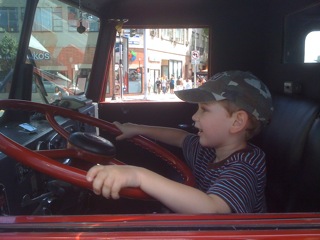
So 28 miles later, I cleanup and hit the road (in the car this time) with the Little One and the Wife. I had pulled out a shirt with happy little football on it, and hoped that I might get a chance to watch a little bit of opening day Jets or Giants. (Both teams won!) We visited a favorite craft fair and said hello to some of the artists and artisans we see year after year (they do become like family after a while… you know the good family that you miss hanging with and don’t see often enough). The Wife picked up a inexpensive bauble or two, and then on our way to check out the “tent sale” of another favorite store, we ran into a street fair where the Little One got a chance to climb into a fire truck for a photo-op. Moments later, the two of them were contemplating a classic street rod. Ah… the joys of youth. And in this fashion the last Sunday I’ll be able to enjoy for a while was spent.

IMG_0234.jpg
IMG_0235.jpg

Catching up on a busy Friday…

UK_181_1_3--220-220.jpgI can feel the cool weather returning, and my bike rides getting cold (I generally have to ride early.) The Lightweight Softshell pictured here (which may not be continuing in the line) is a perfect complement piece for these midway days. It’s light and folds down to nothing, yet it’s rain resistant and wind blocking and nice enough to wear off the bike. I recommend purchasing Rapha out of season as the prices reflect the quality, but by all means… do get some into your bike kit. It’s wonderful stuff. Unfortunately for me lovely gear bought for me last year will be somewhat large on me this year. So it goes.

img_1170_small.jpgA friend at work noticed my shoes the other day… I promised a link. My well worn (and much beloved) 5.10 Guide Tennies. The Stealth rubber is awesome outside, but be careful inside, you can easily leave scuffs (which you can remove eraser like, but still. Super adjustable, with just the right amount of stiffness in the sole. An approach shoe, it’s an excellent all arounder and joy whether doing some hiking, a bit of climbing, or just hanging around. Of course, it well suited to those common occasions when you’re doing all of those, and I’d add an excellent shoe for “casual” biking as the sole has some stiffness to it which makes comfortable for pedaling with good energy transfer. I wore out the previous pair in just such a fashion but their demise was the result of my stubbornly riding my commute in the rain, and getting covered in liquified goose crap. Everything else (bike included) washed up nicely. The shoes were going to reek forever. So it goes.
IMG_0158.JPGNext up is the continuing tastings at work. We trying craft beers, and having a minor blast doing it. This is round two we’re looking at. The Blue Point Blueberry Ale was the one everyone loved that days. Kudos also went to the Troeg Troegenator on that day. A follow up tasting brought enjoyment from the Southampton IPA. For me, We didn’t have the sort of food that compliment the Hop Rod Rye… it might have gotten a raw deal. Next tasting in a week. So it goes.

Next up date is tea. IMG_0171.jpg Green tea specifically. This is part of the “vanquish the last vice” effort. I try and find what I think is the habit or vice that is most destructive to me and remove the most destructive portion. In my case that would seem to be the copious quantities of Diet Coke I drink at work. I’ve replaced that with drinking green tea. Adagio.com makes this simple with their IngenuiTEA pot. A simple strainer mechanism makes it super easy to get hot water and leaves in and tea out in about 3 minutes. A 4 cup sized device means there’s not really enough for our group. So it goes.

IMG_0173.jpgThe last of today’s updates was some artisanal hand made, fair trade, you got love people who care this much Chocolate (that’s correct capital “C” in this case) from Taza. The team was celebrating yet another launch, and so as is our way, a bit of chocolate is handed out to celebrate the achievement. In this case the Guajillo Chili, Cinnamon, Vanilla, and Cacao Puro varieties were loved in that order. Folks loved the crunchy nature of the chocolate (it’s stone ground so bits of sugar and cocoa nibs remain). The Cacao Puro probably didn’t get a fair shake since it came last, and had to compete with others. The Vanilla was considered a bit too subtle. So it goes. IMG_0169.jpg

A bad day, some great beer (Dogfish Head)

So it’s been kinda rough (it’s all relative, but ya know.) Work has been a challenge, it’s still rainy on the weekends, and Lisa has been going through some health stuff… and some great folks have passed away recently.

A couple guys were let go at work. And it’s never easy, and they were good guys. To clear the air we arranged our team room more to our liking. It helped clear the air, set a new spirit, brought some of the lightness that comes with cleaning and clutter removal. But it wasn’t quite enough.

We got a chance to work with someone new on some of our stuff this week. Matt has been really cool to work with, we’ve got the start of some excellent improvements. Living as he does way closer to Philly than I, he was able to procure some excellent beer which is hard to get up here.

dogfish_head_box.png

Some friends had long ago recommended Dogfish Head Craft Brewed Ales, but it was not easy to get the varieties around here, and I had only tried one. But it lent enormous promise to this undertaking.

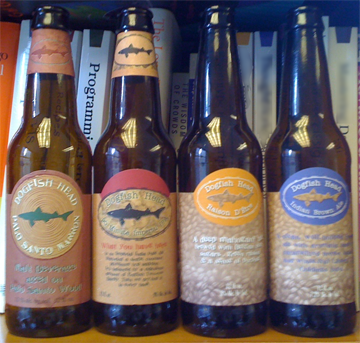
Matt understands the awesome power of beer, and in true braveheart, knight of the realm, heck or high water fashion, dragged six packs and four packs of Raison D’Etre, Indian Brown Ale, Pano Santo Marron and 90 Minute Imperial IPA (all from Dogfish Head) up from down there to us here in the Big City. Considering it’s like a 3 hour train ride and haul across town… it was much appreciated.

We made some room in a little known fridge for six bottles and got to work. At the end of the day, with one last meeting to go, we broke out the varieties for some tasting to go with the meeting. Now anyone who has cracked a cold one when a group has been working hard and fighting the good fight knows the positive impact a good beer can have… this wasn’t a loud, chugging keg thing… it was a tasting, an exploration, a gentile experiment in the possibilities and hard work of others… a small bit of sensory payback for a hard working team enjoying the work of other hard working folks (beer this good cannot be easy to make!)

And the Dogfish Head did not disappoint. Mark had this to say about the Palo Santo Marron “I love the caramel flavor! One of the best brown ales I’ve ever had.” Evan said “If I had to assign a number between 1-10 the Raison D’Etre would get an 11” (and I’d agree, I loved it! Lively and filled with flavor, beautifully balanced, with a rich earthy color).

Unsurprisingly, there was a lot of “Hi, c’mon on in, the meeting will be over in a few minutes, grab a glass and have a taste (pause for pouring, sniffing, tasting… ah and then…) “You guys sure know how to live!”. Which is is exactly why the effort was made to procure Dogfish Head. The team deserved to feel that level of care and appreciation. Done.

Dogfish Head… simply amazing. (If you’re reading along here, make the effort to try some.) It’s a shame they don’t sell sampling packs…

dogfish_head_samples.png

We’ll be doing this every two weeks, suggestions about highest quality craft beers are welcome…