A Supercomputer in Every Backpack

A Supercomputer in Every Backpack: People visit my school all the time. They shake my hand as they leave and tell me how inspiring it all is and often they sign off with “truly, the iPad is the future of education”. I bite my tongue every time because unlike Richard Stallman I’m not an anti-social jackass, but I want to correct them.

I want to tell them that the iPad is not the future of education, it’s the present of education. If we consign the iPad to the realms of the future, then we are implicitly saying that it’s not for right here, right now, today. We’re saying that we can postpone the task of seriously engaging with the educational and social impact of ubiquity of Internet-connected computing.

I ask you to consider other industries that put off dealing with such challenges. How is that approach working out for record companies? For newspapers? For booksellers?

The hour is already late. We have allowed a 16-year gap to develop between society and schools in terms of our children’s access to computers. Can we properly prepare Beth and her cohort for the year 2029 with the same level of access to computers that I had 35 years before?

How long can we let this gap continue to grow? Another five years? Another ten? In another 14 years, if GSMA are right, society as a whole will have 7 connected devices each – will we be delivering relevant education in that world if each pupil only has a third of a computer to themselves?

Cedars is not a school of the future. I think we’re a decade late. [Everything that Fraser has been working cuts close to my heart as I concern myself Noah’s education. What parts are his school getting right? What parts are they getting wrong? Where is it so bad that I need to shore it up, where can ignore it as it as irrelevant? Clearly his school has the computer and technology stuff wrong. But I don’t think it matters because that is something that I can (fortunately) fix. Not everyone can, but I (we) can. The stuff I can’t fix? What they feed him. The crappy behaviors he learns from the kids on the bus. Yeah, I know all survivable stuff, but considering the importance of these years… anyway, consider how your child’s education doesn’t match the needs of the marketplace. What are you going to do about it? Where do you think it’s lacking?]
Source: Fraser Speirs

Publishing has moved on

I’m going to talk about “content” for a minute. I’m going to define it as stuff I read. And what I realized is that going back to my earliest days of the web, I don’t consume content. I use it to support my writing, which is really an ongoing conversation with my friends.

In the final analysis we’re all media outlets now.

So my writing and thoughts (and yours as well) move from friend to friend through the social network, far from the original source of the story. Sources of stories that are shareable are preferable because I can weave them into my thoughts, display the context of my thinking, and minimize, in a shorthand kind of way, how much writing I need to do. And because linking is so important, a shareable amateur source is preferable to a professional source that requires me to pay, or worse, requires everyone to pay.

Someone who reports a car accident with a few cell snaps is doing a far better job than the person who picks up a report off the police blotter. Someone who visits the family and reports on how things are going is doing a far better job than someone who gets the “patient is stable” report from the hospital. What matters it turns out is not publishing, which has become easy at even a world wide level, but reporting, analysis, and story telling.

We should be talking about new models for employing reporters, photographers, authors, and story tellers of every sort, and not publishing. Publishing has already moved on…

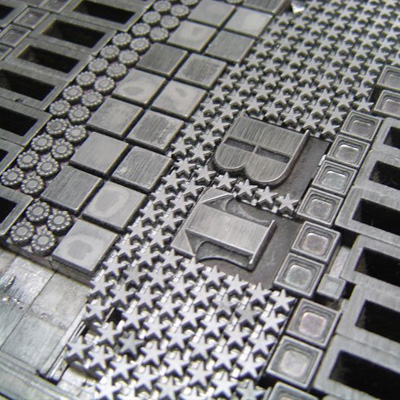
letterpress.jpg

The Mac App Store: can it change the software business?

The Mac App Store: can it change the software business?:

What is it that makes the iTunes App Store so compelling? Will the value the App store added to the iPhone be added by the Mac App Store to the Mac?

Here are the characteristics I think make the App Stores valuable:

  1. They redefine software as content. The pricing, marketing, discovery and buying process is identical to that for content like music or video.
  2. They redefine the skill required to create a relationship with customers. They allow a new class of less-skilled and less-capitalized developers participate in selling software directly to the buyer. By “skill” I don’t mean engineering skill but marketing skill. A developer can create a product that can reach millions without having to acquire with channels and distribution skills.
  3. From a consumer’s point of view, they simplify purchasing and lower the price of software.

These three characteristics of app stores make them disruptive. The disrupted companies are the traditional software publishers. The response from game publishers to the App store were predictable: they condemned it for destroying value, “cheapening” their product, and creating a race to the bottom. They also predicted that it would all end badly as nobody would make any money.

The truth is that they were disrupted by different cost structures. The entrants did not need to spend on market development, and focused on innovating on the essential novelty of the user interface.

So the Mac App Store could be disruptive to traditional software vendors. A large new population of software developers could emerge targeting the Cocoa environment and they may bring new apps that move the jobs that the computer is hired for to appeal to new users.

However there is a problem. The Mac is a small target market relative to iOS. Apple announced that there are 50 million Mac users. This compares badly to the 130 million (or so) iOS users. It won’t be long before 50 million iOS users will be added every three months.

So the first thing that Apple needs to do is grow the Mac installed base. Perhaps the new Air and following updated to the MacBooks will do just that. But the growth rate needs to be an order of magnitude faster. And I suspect price is an obstacle to this growth.

Regardless of this obstacle, the Mac App Store has the potential to change the appeal of the Mac. As the first personal computer with an App Store, new uses may emerge and create the same app-platform effect.

[All good points. See more here.]
Source: asymco

iPads, Curriculum for Excellence and the Next Generation

[This is important enough to “reprint” in full. Go Fraser! Here’s a feed for the #ediff hashtag on twitter]

iPads, Curriculum for Excellence and the Next Generation:

There’s been an incredibly fertile discussion channel on Twitter since last Friday, organised around the hashtag #ediff.

I was working on a presentation about our iPad deployment when Frank Crawford (@frankcrawford) posted three tweets that chimed almost exactly with the topics I was working into my presentation.

Frank’s first tweet:

Outcomes for kids – CfE – learning, being confident, contributing, participating. Where does tech contribute?

I’ve been developing a presentation to explain where we see our 1:1 iPad deployment in the light of Curriculum for Excellence. Inspired by Frank’s tweets, I’d like to expand on some of the thinking here.

Successful Learners

The iPad will not create successful learners by itself. We are finding, however, that the increased relevance of iPad-based teaching is producing increased levels of engagement both in class and with homework and study at home. Engagement is a necessary condition for success but it is not, alone, sufficient.

We often get questions like “well, how do you know your pupils are learning when you teach with the iPad?”. The answer, usually, is “the same ways we know pupils are learning when we teach with textbooks, paper, whiteboards, multiple-choice tests, art materials or newspapers”.

What the iPad has allowed us to do is to bring digital resources up to the same level of availabiliy as paper resources in our teaching. It’s unthinkable that pupils would only have one or two hours of access to books each week, yet that was the position with digital resources before we deployed the iPad.

Confident Individuals

When pupils learn with the iPad, they are learning in their own technological vocabulary. Personal computers – whether Windows or Mac OS X – are not most teenagers’ common experience of personal computing.

We find that pupils are incredibly confident in using the iPad and that this feeds into confidence in their work. Our art teacher, Jenny Oakley, recently talked to me about the impact of iPad on her art teaching.

She told me that the iPad forms a kind of “digital safety net”:

In some ways it more effectively helps pupils to develop confidence in their abilities and an enthusiasm to try than some traditional media. This is largely due to the immediacy of its set up, tidy up and effects, the security of an ‘undo’ button and that mark making is controlled directly by the finger itself.

Pupils do not have to overcome the hindrance of learning to manipulate another tool or implement, rather they can use the natural tool they have been developing dexterity in since birth. Once taught the basic principles of a range of art apps, pupils can achieve worthwhile results. They then begin to feel more confident and so become more willing to try – in the art classroom this is half the battle.

As a direct follow on from this pupils then do actually begin to achieve better results – their increased confidence increases their effort and enthusiasm and they feel less threatened and more relaxed. This confidence can then be extended and transferred into other art media.

We are seeing same impacts in other areas, such as creative writing at all levels from Primary to Higher English, where digital text editing and peer evaluation are producing excellent results.

We are also focusing heavily on presentation skills using Keynote on the iPad. It is my personal belief that Word Processing – setting text on a computer in preparation for printing on paper – is a skill that will wane in value over time. Communicating your ideas to an audience is a skill that is already a clear competitive advantage for those able to do it effectively. Few skills demand the development of confidence like public presenting.

Effective Contributors

iPad is removing the friction in contributing. At its simplest, the easy flow of documents to and from the iPad has already transformed our processes of setting and submitting homework.

In class, we are seeing greater collaboration and sharing with iPad. The design of iPad directly lends itself to working together and collaborating – even without specific software support for networked collaboration. The iPad can be handed over to another pupil, turned around to show results and quickly connected to a classroom projector to share work with the entire class.

Compare this to the prior experience of trying to turn a desktop computer monitor around to share your work with someone else, or the experience of three or four pupils huddling around one computer to collaborate.

An example from Computing: we often do exercises where pupils are given a purpose and a budget for buying a computer system and they have to specify a couple of options and recommend one.

In earlier times I, in my “exam conditions” mentality, would often force this to be a solo exercise. Recently, I tried it with paired working with two iPads: one pupil worked the web to find results and the other pupil operated Numbers on their iPad to catalogue what they were finding together. They collaborated on the recommendations then, at the end, emailed me their spreadsheet and CC’ed the web-searching pupil so both had a copy of the shared work.

Each pupil made a solid contribution to the outcome and the results were effortlessly shared.

Responsible Citizens

Acting responsibly online is just one (admittedly huge) aspect of the entire citizenship agenda. As a big part of the iPad deployment, we comprehensively reworked our Acceptable Use Policy to make direct references to resources such as social networking as well as the more usual email and web publishing.

Responsible citizenship goes further. By sending iPads home with most pupils, we are giving them access to global sources of information and we’re working with that in class. No longer can pupils use the “we don’t get the newspaper in our house” excuse for being unaware of current events.

Here’s a comment from our Modern Studies teacher, Emma Rukin:

The tasks have become more challenging and worthwhile, as the iPad allows for multi-faceted tasks to be set that combine reading, comprehension, source analysis and internet research in one. Similarly, pupils who require extra support with, for example, a written task, are much happier being emailed a writing frame than being given extra sheets in class.

The biggest difference I am noticing is that pupils are increasingly suggesting uses for the iPad themselves. In particular, after just a few weeks of iPad 1:1 deployment, pupils are asking if they can use the internet to supplement answers from textbooks, or to find out about particular things that interest or confuse them. In the upper half of secondary pupils have improved dramatically in their ability to find relevant accurate answers using the web. They are improving their ability to frame a question.

All Modern studies pupils now have access to a wide variety of news sources, meaning their knowledge of current affairs is growing, and their weekly assessments reflect this.

One of our English teachers, Rosalind Creighton, sent me this:

The S2 class have been analysing some of the articles that have been written about the implementation of iPads in the school. I emailed them a document with links to various articles and questions on each article. This made it much easier for us to read the articles as a class, and saved on photocopying.

The purpose of this unit of work is to teach children how to assess the reliability and credibility of sources; recognise bias; and understand the techniques writers will use to persuade their readers (all CfE experiences and outcomes!).

I’d particularly like to thank certain sections of the press for providing Mrs. Creighton with such a, well, broad spectrum of material to work with.

What Technology Should Be

Frank also tweeted the following desiderata for the use of technology from a learner’s perspective. The tweets are here and here – I’ve just reformatted them in a list for this blog.

As a learner, technology should be:

  1. Everywhere, ready to use.
  2. Easy to use.
  3. Desirable to use.
  4. Challenging my skills.
  5. Sharable
  6. Collaborative
  7. It should play to my passions
  8. Used in useful contexts (from the learner’s perspective)
  9. Authentic

I believe that point #1 is well placed at the top. We are convinced that the ubiquity of 1:1 deployment is the sine qua non in transforming our learning and teaching. Without 1:1, you lose the sense of personal engagement with a personal device. The pupils’ sense of ownership is dramatically diminished.

I don’t think I have to make a case to readers of this blog that the iPad is, by any measure, easy and desirable to use.

Making sure that iPad use challenges the skills of a learner is a big question that we are all on a learning curve with right now. I think the whole school staff are only just starting to understand how far we can really push pupils equipped with their own iPad. As readers of this blog can probably tell from the changed tone of my posts over the last few weeks, this is precisely where my thinking is going right now.

I’ve already discussed the capabilities of the iPad in sharing and collaboration, but one more story: last week, I was accosted in the corridor by two pupil reporters wanting to interview me about iPads for the school newsletter. I was running around fixing wifi base stations and quite busy. Instead of taking me to a classroom where they could formally interview me and type my answers into a computer, we found a couple of seats in the hallway. They pulled out their iPads and we did the interview questions and they took notes on my answers right there and then.

Instant, frictionless, collaboration and sharing using high technology transparently with a strong focus on the actual task of “doing the interview” rather than “doing the interview and recording the answers on the laptops that we have booked for this one afternoon of the week”.

We have only given one directive to our teachers for using the iPad: it should be used everywhere it’s useful and nowhere that it’s not. We did not dictate many specific uses for the device, preferring to leave it to classroom teachers to identify the places where the device will be useful for each subject’s unique requirements.

The only specific use we dictated was that everyone should use the Calendar app to record homework. That’s a useful context for learners and we’re seeing dramatic improvements in homework return rates.

Frank appended a “(yuk)” to the last idea of authenticity but I think there is a point to be made here. I personally believe that pupils – particularly early secondary pupils – crave relevance and authenticity in their learning. I can teach about mainframes and disk drives and everyone’s bored. When I facilitate a discussion about why Apple switched from hard drives in the iPod Classic to flash memory in the iPhone, everyone wants to talk about it.

By deploying the iPad in the school and using real-world commercial software instead of “education-specific” clones of real software, we are delivering an authentic experience in school that mirrors and is relevant to the experience of technology that pupils have outside the school and bring to school with them.

[So there ya go. I’ve been thinking about how to correct this situation for Noah for weeks now.
Source: Fraser Speirs

Bad traffic can still be beautiful

IMG_0267_2.jpg

This person’s day went to hell fairly early on. Fortunately it only slowed me up a bit getting into the City this morning.

I hope everyone came out of this OK. Sadly, I suspect not considering the level of police activity. But there was still beauty to be found while I waded through an hour of traffic caused only by the extraordinary jackassery called “rubbernecking”.

It’s not necessary and it wastes a lot of time, gas, and emotional energy.

No plea for sympathy here… if you want to feel bad, feel bad for the folks who were trying to get out of the City who were stopped dead by the accident investigation. Innocent victims to be sure.

Maybe they had good coffee with them? More photos here.

IMG_0272.jpg

The week in links

What the iPad changed

Not that long a go a “workstation” implied an integrated effort. Hardware and Operating System engineered by the same company which ensured a more seamless experience. There have been many companies that have produced these integrated efforts including Sun and Apple.

Certainly the out of box experience of Lisa’s iMac was exceptional The unit was unboxed. The power cord was attached to the back and the wall. The power button was pushed. The computer suggested putting the batteries in to the wireless mouse and keyboard and connected them to the system when that was complete, and a few clicks later Lisa was ready to get to work. One wire. If only Shipstone existed outside of Heinlein books.

That experience, as great as it is diminishes over time. Why? Because after all that is over, it’s still a computer. You have apps to install, files in a file system, bookmarks in multiple browsers etc. Essentially, all the baggage of computing that has accrued over the last 25 years or so.

The iPad is yet another step along the path of washing all that away. Many of us are used to a near continuous connection to the nets. Many of us have storage “in the cloud” that makes our work available where ever, whenever. The IPad hides the OS, it hides the file system, it hides the computer. It make software as much of an appliance as the hardware has become. It seems, while you use it, do only do one thing. As if at that moment it’s nothing more than a email device. Or a “todo” list. Or a spreadsheet.

Once again it’s about simplicity. It’s about making choices as a designer, having an opinion about what’s needed, for whom and when. Will it be all things to all people? Of course, not. But it could well be a device for many people for much of the time. And easier and more convenient to use than a laptop or desktop computer. We’ll see.

hero_20100127.jpg

Deriding Apple

The can’t help themselves. Even when they’re bashing Apple they praise Apple. From “Why the iPad will fail and help Windows 7 to succeed.

Firstly this new type of device, obviously based on something that’s been around since 2002 but we’ll skip lightly over that one, is a very interesting form-factor that, now popularised will enable just about everybody to produce a clone tablet.

So now that Apple has shown everyone how it should be done, they’ll be able to clone the device and stick Win 7 on it? That’s exactly what hasn’t been working since 2002 that you skipped so lightly over. Next! BTW, It would appear that “popularised” is misspelled. Maybe that’s a Win7 bug? Heh. Just funnin ya’ll.

If only…

In late December when Lance Armstrong tweeted: “Epic ride . . . 115 miles, 6.5 hrs, 10k ft climbing, 5300 Kjs. Sunny and 70 most of the day til we finished in the dark.”

To us mere mortals that’s an average of 17.7 mph (28.5 kph) on a mountainous training ride. Ouch.

In part it explains why the story of Joao Correia, who lost 60 lbs. and is riding for Cervelo Test Team is so compelling. Inside of each and every person is a voice that says, if I could only train more, drop the weight, I too, could be a pro. (Hey people, try and remember he was a pro before he gained that weight, *you,* most likely, were not.)

I’ve been fascinated by that voice since I was a little boy. I know the truth now. I’ve played with top notch football players who were going to the NFL combines and not quite making it. I’ve played on fields, and courts, played chess against masters… I love learning my current limits. It just extends my reach.

I’ve also been on bike rides with Cat 1 & 2 racers (who are still not pro level) and as usual, what they do on a bike and what I do on a bike are only similar in the broadest sense. That’s cool. I don’t aspire to be a pro or even race. But there’s always a little voice inside of me that says… if only. That voice makes anything possible.