If you don’t like my rules, don’t play.

How Apple is sabotaging an open standard for digital books:

So Apple, which claims to use the EPUB format exclusively, has now created an incompatible, proprietary version of that format. And with iBooks Author they’ve added licensing terms that restrict what an author can do with the generated content.

The designers of iBooks Author went to great lengths to make sure that the program will not work with “the industry-leading ePub digital book file type.”

[Nobody says you have to use Apple’s tools. Nobody says you have to publish an iBook. No one says that iBook == ePub. What’s the problem here? If you don’t like the format, if you have a vested interest in seeing ePub be the one and only true format then by all means don’t publish your stuff via Author and its currently greedy EULA. Don’t whine that you’ll be missing out on sales, if all this other stuff is important to you that’s a choice you get to make. Everyone runs into this situation growing up. One kid owns a ball. We gather to play a game. Kid is unhappy with the way the game is going (for them) and take their ball and go home. If you want to play in APple’s sandbox, it’s by their rules. If that doesn’t make you happy, don’t play. Feel feel to discourage others not to play.]
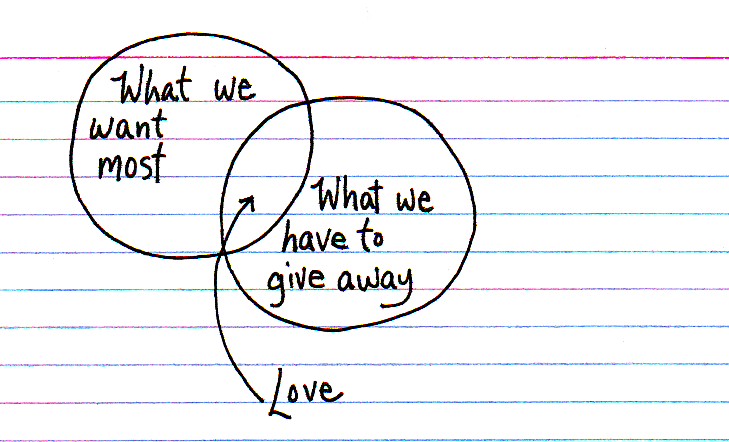
d: Where do books fit?

The Unprecedented Audacity of the iBooks Author EULA:

In other words: Apple is trying to establish a rule that whatever I create with this application, if I sell it, I have to give them a cut. And iBooks Author is free, so this arrangement sounds pretty reasonable.

[This is being bandied back and forth. Where else but through iBooks would an iBooks file be used so who cares, or maybe it was an overzealous lawyer at Apple, or as the above. What is the place of books in the future of education.

I was rarely interested in sitting and reading a textbook. Even history, with its arc and story was often reduced to a memorization of a bunch of facts about which I no longer had the slightest interest. But science lab, or a field trip to a historical place, or anything where you did something, worked with something, *touched* something worked for me.

So where do textbooks fit? Where does it make sense to have a primary learning experience consist of this? Most of us can look up facts whenever we need them. We can find well written accounts of virtually any topic, and it’ll include almost up to the minute news and recent changes in all but the most esoteric fields.

What I’d like to see for my kid is some sort of 1:1 iPad to student program. That should easily cover the 5 Rs. Art class, music class, etc. can all be bought this way as well, although I wouldn’t try and remove the chance for kids to play real instruments, apply paint to canvas, water color, go to museums, and mix stuff together in a science lab. Quite the opposite, I would encourage that more time and money be spent on those things. The social experience of going to school, the chance to bring Noah first hand (literally) experience with things that I cannot are why I want from his school. I admit, to my sorrow, that part of this is also “day care”. Both my wife and I work, so we need to make sure some one we trust is caring for Noah, but I want that time filled with great stuff now, while his mind is like a sponge. For the moment, Noah’s working on the basics (reading , writing, etc.) Soon those things will be just gateway skills to the real stuff. And I want him to have a modern education, not one that was designed 100 years ago.]

Source: venomous porridge

Compare and contrast: The 4 day work week.

So there’s a pointer to this Inc. article in my inbox this morning. I don’t need any convincing about the potential for a company to form its own work schedule. But it seems to me that this article is lying, or the author is fooling himself, or worse, he’s taking advantage of his employees. To wit: The Case for a Four-Day Work Week

The extra time for research makes for a well-informed team and the realization they have something unique.

So they work 40 hours in 4 days. But then, they get to do research on their “day off”. Huh? How is that helping? I realize that they can run errands and do other things at home since their not expected in the office, and mot likely do not have to answer email, the phone etc. But this smacks of creating a 48 hour work week to me. Either include the research in the work week (“Hey, I need my people to keep up!”) or crow to Inc. magazine how you you fooled your employees into a 48 hour work week and here’s how. Or, one more possibility, no one’s doing anything significant for the company on that day and he knows it. Which makes the article a lie about the benefits of time for research.

Now compare that to how Jason Fried talks about the topic of his company’s schedule:

I don’t believe in the 40-hour workweek, so we cut all that BS about being somewhere for a certain number of hours. I have no idea how many hours my employees work — I just know they get the work done.

Only half the people in the company lives in the area where they could possibly come into the office. But there’s no requirement to at all. They don’t track hours because that’s not the goal. The goal is getting stuff done. I’ll bet there are weeks where people work many more than 40 hours, and times when they work less. Does it matter? Being home to “meet the plumber” shouldn’t be a benefit, but common sense. Not being able to schedule appointments and handle the trivia of life adds enormous stress to people. Do you want a bunch of stressed out, unfocused, people working with you? (do you think the leak held? No shower this morning, gah. etc. throughout the day) Do you want to create an environment where people consider lying as a time management strategy? (Hmm, I should call in sick so I can take care of this.)

Anyway, regardless of whether any of this works for you or your company try not to use it as a means of extending the work week rather than embracing the real benefits.

Transparency and Technology: Secrets of Small Farm Success

Transparency and Technology: Secrets of Small Farm Success:

But there are a number of advantages to being small. Chief among them may be the ability to connect with individual customers and achieve a level of transparency impossible (or at least undesirable) for larger, factory type farming operations.

“I think a lot of people are finding out – not just farmers, but also fish providers and other producers – that transparency in and of itself is a great marketing tool,” says Barry Estabrook, James Beard award-winning food journalist and author of Tomatoland. “That means encouraging your customers to visit your farm, to talk about how you produce food if you serve a market or CSA.” For its part, the government is at least aware of a growing desire among consumers to learn about where their food comes from. In 2009, the USDA launched the Know Your Farmer, Know Your Food (KYF2) to help strengthen local and regional food systems by helping consumers “connect with their food and the people who grow and raise it.”

[It grow ever more obvious to me that in a world filled with “marketing” that lacks substance that the solution is purchase as much as possible from people. The environment benefits, your community benefits, you benefit. A triple play.]

Source: Blog: Slow Food USA

Lack of constraint is most expensive of all

Glenn Fleishman on Roboto:

Carter said last year, “All industrial designers, and I consider myself one, work within constraints. Architects have to build roofs that keep the rain out and so on. It’s particularly severe in the case of type designers, because what we work with had its form essentially frozen way before there was even typography. The Latin alphabet hasn’t changed in a very long time,” said Carter. (Carter declined to comment on Roboto in particular, but gave me permission to quote generally from last year’s interview.)

Duarte echoed this in an interview conducted a few weeks ago. He said, about constraints around developing interfaces and fonts for new media, that “The important thing is each of the new technologies creates new boundaries for new types of expression. There are new tradeoffs. For everything that is lost, there are new possibilities.”

Gruber says: Roboto is just the new Arial.

[Setting aside the typographica for the moment, deciding on constraint maybe the single greatest factor in any work. Nothing is free when it comes to this decision.]

Source: Daring Fireball

Scripting News: The Un-Internet

Scripting News: The Un-Internet:

Every time around the loop, since then, the Internet has served as the antidote to the controls that the tech industry would place on users. Every time, the tech industry has a rationale, with some validity, that wide-open access would be a nightmare. But eventually we overcome their barriers, and another layer comes on. And the upstarts become the installed-base, and they make the same mistakes all over again. 

[Like all things, we run in cycles. They are rarely broken.]

Google and Facebook… they’re never free.

Pusher 2.0:

This also puts the “new business model” mantra in a new light. Remember that the classic business model is a simple monetary trade: the customer gets something of value and they pay money for it. It is fair and easy to understand. The further we go from it, the closer we come to a point where we are forced to choose between going out of business or throwing business ethics out of the window. In order to maintain the illusion that the customer can get something valuable for free, we may have to introduce the illusion that they are getting it for free (while in reality, we collect stuff from them that they may not be inclined to give away). Once you cross that moral event horizon, it becomes much easier to do other objectionable things. I mean, that’s how the new economy works, right?

I’m just thinking out loud and I have no ready-made conclusions to offer, but perhaps we should be a little more hesitant to sing praise of “revolutionary” new ways of doing business. Unless there’s a clear element of trade evident and the terms are set out, chances are that somebody’s getting cheated. Continue reading

[This piece continues my theme that the more convoluted transactions become the more problems they create for our society—Stay close to the source. If I drive to a store and purchase something made by the individual selling it (or at least the person in the shop in the back) that has tremendous social value. And it doesn’t matter if that’s a kitchen knife or software or a bicycle. The longer the chain gets from “I did it” to “you bought it” the chances for negative social effects increases, and happily the positive social effects increase the closer you get to the source. In the case of Google most of us were happy users because of their great search results. That was a long time ago, and they started tracking me long before I paid any attention to them. Facebook’s “sale” takes place when you sign up, with no explanation of the game whatsoever. I recently saw a news program where individuals were asked about the GOP candidates by name. And while I realize it was a produced segment (edited for results) they had no problem finding people who didn’t even know the names of the candidates, never mind anything about them. Considering the barrage of coverage and the endless debates… imagine what people don’t know when it’s actively being hidden from them? ]
Source: The Cynical Musician

Fred Blunt’s heartening work

This time of year is rife with Pagan rituals “According to this pagan tradition the mistletoe dart was plucked out of Balder’s fatal wound and given to the goddess of love, Freya. From this, came the custom that a man may kiss a woman if he sees her under the mistletoe.” Seems like as good a reason as any.

Dig Fred Blunt’s work:

Christmas kiss