On the Impracticality of a Cheeseburger

On the Impracticality of a Cheeseburger:

Waldo Jaquith:

A cheeseburger cannot exist outside of a highly developed,
post-agrarian society. It requires a complex interaction between a
handful of vendors — in all likelihood, a couple of dozen — and
the ability to ship ingredients vast distances while keeping them
fresh. The cheeseburger couldn’t have existed until nearly a
century ago as, indeed, it did not.

Love the Sagan quote at the end.

[While an interesting thought experiment it doesn’t ring entirely true. Sure there can be problems with the seasonality of vegetables, but cheese making would have been a continual pursuit for those who did it. And while animal rennet is certainly most common, there are vegetable used rennets as well. etc. etc. The truth seems closer to “it takes a village” than do it all yourself. Maybe you hot house something, trade for some cheese, and no doubt, pre-freezer slaughtering a cow or a sheep would require multiple families because a single (unless very large) family couldn’t eat the animal fast enough… I try and enjoy each season for what it brings in all senses. The weather, the food, the holidays. So I think the effort to completely raise the entire meal from the ground is cool, much as planting trees to turn into furniture later is cool. But that path is long, and life is fleeting.]
Source: Daring Fireball

Monsanto Corn May Be Failing to Kill Bugs, EPA Says – Businessweek

Monsanto Corn May Be Failing to Kill Bugs, EPA Says – Businessweek:

Monsanto should enact a remedial action plan in fields where resistance to its Bt insecticide is suspected, the EPA said. That includes having growers use conventional pesticide to kill adult rootworm beetles late in the season and alternate pest control methods in the following season.

Monsanto tested rootworms for resistance in Nebraska, Illinois and Iowa and should expand the monitoring to Colorado, Minnesota, South Dakota and western Wisconsin because questions about the performance of Bt corn extends to all seven states, the EPA said in the memo.

Monsanto’s most advanced resistance problem is with crops engineered to tolerate its Roundup herbicide. Weeds that are no longer killed by Roundup have invaded 14 million acres of U.S. cotton, soybean and corn, according to Syngenta AG, a Swiss chemical maker. A Dow Chemical Co. study this year found as many as 20 million acres of corn and soybeans may be infested.

[What an incredible mess is being made with this. Life always finds a way. Try your best not to buy and eat these products (easier said than done, I know).]

McDougall Newsletter: November 2011 – Why Did Steve Jobs Die?

McDougall Newsletter: November 2011 – Why Did Steve Jobs Die?:

Neither Steve Jobs’ vegan lifestyle nor turning down surgery were the acts of an insane man. Rather both decisions demonstrate his rationality, genius, intuitiveness, and internal strength to stand up for what he knew to be right. The truth may now give family and friends some peace of mind. Also those who tied Jobs’ cancer to his vegan diet can now go back to healthy eating. Understanding and publicizing the cause of his cancer should also focus more attention on the serious harms caused by chemicals used in the electronic industries.

Consider the misfortune that happened to Steve Jobs, one of the wealthiest and most powerful men to have ever lived. A little cost-free, harmless, and honest counsel would have greatly improved the physical, mental, and emotional wellbeing of Jobs—especially during the last 8 years of his life, when he gave so much to us.

[Interesting stuff if only conjecture.]
Source: Dave Winer

Why the Keurig K-Cup is the beginning of the end for great coffee « Muddy Dog Roasting Co.

Why the Keurig K-Cup is the beginning of the end for great coffee « Muddy Dog Roasting Co.: Do you think that vision is crazy?  Let’s see.  How easy is it to buy a Walla Walla onion?  Never heard of it?  I’m not surprised.  I grew up with them, but they’re already a thing of the past.  Hundreds of vegetable varieties have already gone extinct, solely due to our desire to homogenize, to have crops that ship well, regardless of how they taste.  Only 5% of US apple varieties that existed just 200 years ago still exist today.   Ninety percent of vegetable varieties have gone extinct over the last 100 years in the UK. The crimson flowered broad bean, the Champion of England Pea, the Bath Cos Lettuce, and the Rowsham Park Hero Onion are just a few examples of vegetables that are lost forever.  Hundreds of heirloom vegetable varieties are on the brink of extinction.  And there are all kinds of other foods that are falling victim to this same phenomenon. Try to buy a really great charcuterie today – Boar’s Head is as close as you’ll get in most places.  A beautiful creme fraiche?   How about Yoplait?  Great cheeses?  We got your Kraft, RIGHT HERE.  Don’t believe me? Go check out Slow Food’s Ark of Taste.  Oh, what’s that, you would like to have a nice meal at a cute bistro?  Sorry, all that’s available now are chain stores like Panera, TGI Friday’s or Appleby’s.  But you can probably score some Jack Daniels chicken wings, or some other ill-advised mess.  I can sum it all up in one word: Monsanto.

[And while Jim of Muddy Dog Roasting Company explains from his perspective. I think this particular paragraph worries me more (I’m not a coffee drinker) in that it is part of a larger problem, which expressed perfectly above. And in case it isn’t obvious the lost biodiversity is not just a loss of taste and experience. That’s bad enough. But it has become entirely clear that eating different foods is healthy for you, and having variations of each food makes that easier (you eat a tomato, but it’s a different tomato). The varying balances of the “ingredients” of a fruit or vegetable is a fundamental goodness. And the craft of growing and preparing food, where the results are not consistent at the “Monsanto” level and don’t try to be is also a fundamental goodness. It’s the same thing that is appealing about anything hand made. Sure, a dreadnaught style guitar has certain fundamental qualities. But each one is different. Hand build a bicycle and each one will have some personality even if you use the same measurements and tube set. That variation is good for us. And we need to be extremely careful that we don’t lose it in a chase to the bottom in the name of efficiency and money.]
Source: Marco Arment

Sitting and Standing at Work

Sitting and Standing at Work:

Ergonomic experts at Cornell don’t recommend standing desks, instead:

Sit to do computer work. Sit using a height-adjustable, downward
titling keyboard tray for the best work posture, then every 20
minutes stand for 2 minutes AND MOVE. The absolute time isn’t
critical but about every 20-30 minutes take a posture break and
move for a couple of minutes. Simply standing is insufficient.

[A big problem at work, we talk and work on these skills quite a bit. We’ve sat on exercise balls, we’ve changed positions, we stand. We’ll keep trying to make this healthier for ourselves.]
Source: Daring Fireball

Interview: Fast Boy Cycles

Interview: Fast Boy Cycles: I danced professionally for a few years, and then taught for almost ten. For a lot of that time I had a company and was making work. I went to art school (university of the arts in Philadelphia). I thought I was going to study industrial design. I was pretty disenchanted when I realized that the industrial designers weren’t that involved in the engineering side of making stuff (or really the MAKING side of making stuff). Mostly just how it looked. How it felt. So there was a lot of CAD work, and some molding of models out of plastic. Someone dared me to take a dance class one night. I did. It seemed like much more fun than the visual arts core classes I was taking, so I switched majors the next day (“you want to switch majors!?” “Yes, if that’s possible.” “have you ever danced before!!?” “Yeah… I took a class last night.”). I stopped to catch my breath almost 15 years later and realized that I sort of hated dance. When I finally ran away screaming, building bikes seemed like a safe harbor. Can’t remember how I connected THOSE dots. [Go read the whole thing. Ezra Caldwell takes great photos, builds beautiful bikes, and continues to beat cancer. In a world where “awesome” is overused…]
Source: Cycle EXIF Update

Battenkill—Sometimes you get to be part of something great

The road

We were going slowly. Seriously slowly. So slowly that folks that started long after us passed us before long. So slowly that The Sweep could’ve been our personal team car. Jenni was *not* feeling well, and it showed. Yes, she was happy to be there (as was I) but she could muster none of what I’ve come to know as Jenni’s riding style. Normally she has a unique blend of pushing her own limits and knowing when to enjoy her surroundings. It’s one of the things that makes it fun to ride with her. Today she had nothing; her heart was racing. We knew that going in (that she’d been struggling with her heart), but what we didn’t know is exactly how hard the course was, the other variables that go into a ride, and how she’d be feeling this day.

We loped along by ourselves enjoying the scenery—which is quite spectacular. Hills, rolling farm land, horses, cows (The Belted Galloway or the Dutch Belted, also known as “Panda cows”), goats, dogs, roosters, chickens, fields waking up from a winter’s sleep, coniferous forest, and lots of pleasant folks doing chores. We inched our way up the super steep inclines, bombed the downhills, and settled into our own, personal, groupetto.

The dirt

A huge part of what made the day possible was Wil. He came along and drove the course with us giving us the near equivalent of a team car. He didn’t literally drive right behind us, but he was never too far, and it made it easier to ditch bottles, have nourishment with us — in fact we never made to an “open” feed station. Wil, team car captain, map in handThey had essentially packed up each time before we got there. A special thank you to him for devoting his entire day (driving 3 hours up there, then the 62+ miles of the course, at bike speed essentially, and then driving back for 3 more hours).

My part in this little saga was that I pulled and pulled and pulled through a metric ton of headwind. As I said earlier, Jenni was not feeling well. So I got out in front, and stayed there, boring a hole in the wind. As a tickling annoyance Ivan said that when we hit that stretch there’d be a tailwind, complete with a “let’s see, the wind is coming from thataway, and you’ll be turning thisaway so it’ll be a tailwind, which is good because that stretch is flat and boring”. Yeah, OK. Whatever. Jenni commented later that she didn’t notice the headwinds. That put a proud smirk on my face. (As an added bonus, when you look at the elevation chart, find the flat section… I’m still looking for it). I did make a bad choice of saddle on the day, and from about mile 1.5 a saddle sore got more and more painful. All the seated climbing, the pace, etc. helped annoy it until at mile 40ish I decided I was not having fun anymore. I wasn’t cooked or anything, but every stroke hurt, and the pain had grown wearying. But that’s when it got interesting. (Further proof that I wasn’t cooked—I’m not sore today at all. No weak legs. None of the symptoms of “blasted” that I’ve experienced before.)

Lonely looking, ain't I?

Moi, passing the same farm

Jenni passing a farm

Jenni’s insides had started to awaken. She was feeling like she could finish the route. She had clawed her way up the first two steeps and there was one more left, and she was determined to finish now that she was feeling better. So while I drank chocolate milk and climbed into the car, she continued on. Naturally, the first thing she did was ride off the course. It was classic. So we turned around and made sure she was back, and then moved up the road a bit.

Jenni's epic

Considering how she had ridden all day, I kept telling Wil to stop and wait, which naturally annoyed Jenni, so after her “suggesting” otherwise we switched to 5 mile intervals… she climbed up and over the hill that most folks complained about which was a looser sort of gravel than the previous stuff. I was thinking about the road conditions as we drove it but my choco-delirium prevented me from acting. I should’ve gotten out and made sure she was riding this collection of marbles well. The Moots was sporting relatively fat 27c tires which would have made it easier for me, but the plan was to meet her just ahead. We pulled over shortly, I got out, climbed back on my bike and rolled back down a short section to meet her on the last section of the loose gravel.

She arrived shortly, cussing about the climb and the decent, picking her way carefully over the tumbling gravel. Once we reached the pavement I could tell that she had ridden herself back. She was tired and flushed looking, but she was riding like herself. And as we completed the last 5 or so miles together I realized how magnificent a ride I had witnessed.

Dead tractor farm

A lot is written about suffering on a bike, and there’s as many types of that as there are riders and roads. But this road was tough. As tough a ride as you could want. 18% grades on gravel roads (at least, that’s the number I saw swimming before my eyes), stair step climbs that mess with your head, and steep climbs with loose gravel combined with a unique relentlessness. And being so far off the back that the desk called wondering whether we had ‘forgotten to check in when we “left the course” since they were closing up’ gives you some idea of where we were at all day long. But it didn’t matter. She was determined to finish what she started that morning, and did so with no lesser glory for the empty lot that greeted us.

It was as magnificent a ride as any I’ve taken part in. My not finishing was not a big deal to me, those 17 miles didn’t represent my goal for the day except most peripherally. Jenni made the Battenkill Preview Ride 2010 a monument to the strength, beauty, and grace that makes cycling so incredible (and yet still a literal pain in my ass).

The ride is great, the volunteers, sweepers etc, were all genuine, concerned, and helpful. The course map sucked, and the placement of things like the first feed station was off by some significant mileage. I had hoped that more “folks” would be there for the ride, but it was really mostly racers who were previewing the course for the races, and so there was a lot of team kit, ass checking, bike checking and the like. Would I do it again? Sure. But I got what I wanted out of this ride and lots more, and there’s lots of other rides to take on… so who knows. But it would be fun to go again.

Check out Jenni’s ride report for more pictures and her own elation. Chapeau to the Cardiac Kid. That was brilliant!

Not shown: The home stretch 5 miles…

Screen shot 2010-03-22 at 10.11.31 PM.png

Here’s the elevation of the first 40ish miles of the route.

Screen shot 2010-03-22 at 10.12.24 PM.png

This year’s favorite things

In the tech category, Rails 2.3, Redis, and the Engine Yard Cloud. offerings have got to top the list of things that improved our ability to deliver products and simplified solutions for us. Github also tops my list of services that have become a way of life. The tech world spins quickly though. Curious to see what’s next. In all cases though, it’s not the tech or the code but the people. All these projects or companies have seriously dedicated people working on them. *That* is what makes these things go. Rock on people.

Quoc Pham fixed shoes
Rapha scarf, Patagonia Nano Puff Pullover
Outlier Black Empire Tee
Stormy Kromer shirt
Rapha Lightweight Softshell
Panache Cycling Houndtooth socks
Outlier hoodie
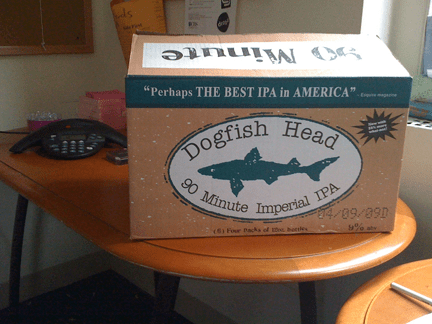
dogfishhead 90 minute IPA
jeff jones silver headbadge
hed ardennes
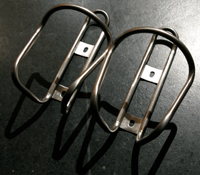
king cages ti water bottle cages
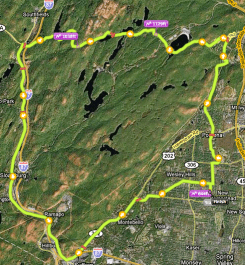
harriman local loop
Chris King ISO Hubs
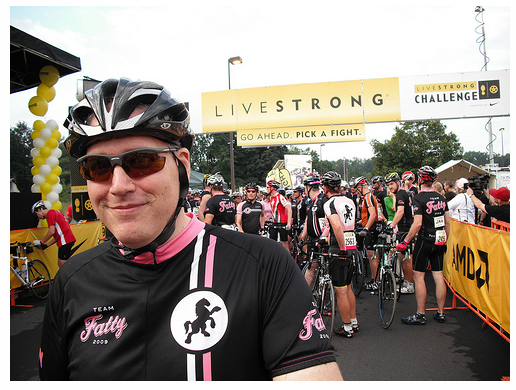
Starting line with Team Fatty at the Livestrong Challenge Philly
Fall riding rocks
Mad Alchemy Mango Love
Taza Chocolate Mexicana helping the dev team persevere
Laying down some fresh tracks in the snow

There might be a few more… time will tell.

Vaccines

Brent on his piece on vaccines:

An interesting link on Daring Fireball today has me thinking about vaccines.

I’m still living with the effects of the chicken pox I had in third grade.

As a parent this is a complicated issue. I’ll get back to that.

It was the in thing when I was just a wee lad to expose your kids to Chicken Pox when the neighborhood kids etc. got it, because it was usually a fairly benign thing, and it was thought to better get it over with now, and then they’ll be done with it. As Brent points out, that’s not always the case.

For better or worse in my case, it never worked anyway. I never caught them and neither did my brother or sister.

Cut to the end of my first year in college. I go to visit a friend for the weekend, and we in turn go to eat lunch at his brother’s apartment. After we get there, there’s whispering between the brothers, and my friend turns to me saying “You’ve had the chicken pox haven’t you?” Um, no. Too late now it would seem. And of course, I caught a case from that tiny little baby (where you couldn’t even really see the pox they were so tiny, and the case so weak (seemingly).

Unlike Brent, I did not get a horrible case. Oh yeah, I looked like hell, but it wasn’t that itchy, and the fever etc was really far worse than the pox in my case. The timing was bad, as I had a must not miss senior recital to play on Wednesday (The itching and breakout started Friday night), and the senior in question was panicking at the rehearsals I was missing, but other than that… I felt pretty good by Monday morning, and while I had some makeup on and felt weak I actually played in that recital. Thankfully that was before the time of the ubiquitous digital camera.

Unfortunately, my sister caught it from me, and her case was far, far, worse. She had pox in ears and throat etc. and was incredibly uncomfortable. I still feel bad about that, though there was nothing I could do. My brother never did catch them, and years later got the vaccine either when his kids got them or the vaccine I forget which.

Fortunately for all concerned, the worst of it is a pox mark reminder here or there. I’ve been marked worse from playing gigs in bars overall.

As a parent there’s a bunch of issues. One is the “are vaccines really the right approach for all diseases.” For example in the case of influenza which changes so rapidly is there any clear scientific proof that the shot you get actually helps you not get sick? With a thankfully strong immune system, I’ve had the flu once in my life (not that it was any fun). So despite my doctor “insisting” that I get a flu shot is it having any effect? And if it isn’t, is it worth the risk?

The same thinking applies to all the stuff that Noah gets. And further there are the issues surrounding Thiomersal(commonly known in the United States as thimerosal) which is almost 50% Mercury and is used in the multi-dose versions of all (almost all?) vaccines. And even if you think any tie to Autism is bunk, should it be risked? Fortunately, it is not contained in most regular childhood single dose vaccines, but you still need to check. And in the end, is it worth the risk? Thimerosal is known to be very toxic by inhalation, ingestion, and in contact with skin with a danger of cumulative effects. And I should have some portion of this injected into my baby? Seriously? SERIOUSLY? Don’t bother talking to me about micrograms…

Noah has had all his “shots” and we are careful to make sure that they are free of toxins etc as much as possible, and I consider it for myself and Lisa every time the Doc pushes a flu shot or some such. But every shot bring s a sleepless night or two. And how much Mercury has accumulated in my system between the shots and the tuna and who knows what else (Solder fumes anyone?) What’s the tipping point that turns me into the Mad Hatter?

This is not easy stuff, and I understand the concerns of both sides, but it is clear that the functioning of living organisms is not well understood by the medical community. No blame here, just a fact from my perspective. Sure they know a lot compared to 100 years ago, but do they really understand? C’mon. And with that being the case, it is hard to take their arguments seriously except from a statistical basis. If you treat people as numbers it works. But if you think of them as people, the “greater good” arguments get harder to listen to as I get older.

I don’t know what the right thing is for everyone, or anyone. But I think that everyone needs to consider issues like this and not blindly follow anyone else’s advice. That I can advocate with a clear conscience.