Hiding Prompt Injection in Legal Filing:
Someone hid AI instructions into a legal filing.
Alternate link.
[The inclusion of prompts everywhere is going to get ugly…]
Source: Schneier on Security

Hiding Prompt Injection in Legal Filing:
Someone hid AI instructions into a legal filing.
Alternate link.
[The inclusion of prompts everywhere is going to get ugly…]
Source: Schneier on Security
NASA’s next big space telescope has left Earth, but it’s not ready to start observing the heavens just yet.
The Nancy Grace Roman Space Telescope launched yesterday (Aug. 30), riding a SpaceX Falcon Heavy rocket into the heavens. Astronomers are very excited about Roman, for it’s expected to discover thousands of new exoplanets and shed light on mysterious dark energy and dark matter, among other accomplishments.
Such science work is a few months off, however. Here’s a brief rundown of the next steps for the Roman team.
[Looking forward seeing the results…]
Source: Latest from Space.com
Great story at Cartoon Brew about Peter Cullen’s voice acting work. I had never really thought why he was so good as Optimus Prime:
His brother’s idea of heroism became central to Cullen’s interpretation of the character and arguably had a tremendous impact on generations of children who could look up to a strong leader who didn’t rely on bravado or overt displays of aggression.
Rest in peace.
[Optimus Prime was sooo well voiced.]
Source: Manton Reece
Audio Hijack 4.6 Is Now Available:
We’ve just shipped Audio Hijack 4.6, the latest version of our audio recording tool. This update includes several small bug fixes detailed in the comprehensive release notes, along with initial support for Apple’s forthcoming MacOS 27 (Golden Gate) release, with no known issues on the new OS.
[Cool stuff… recommended.]
Source: Under the Microscope
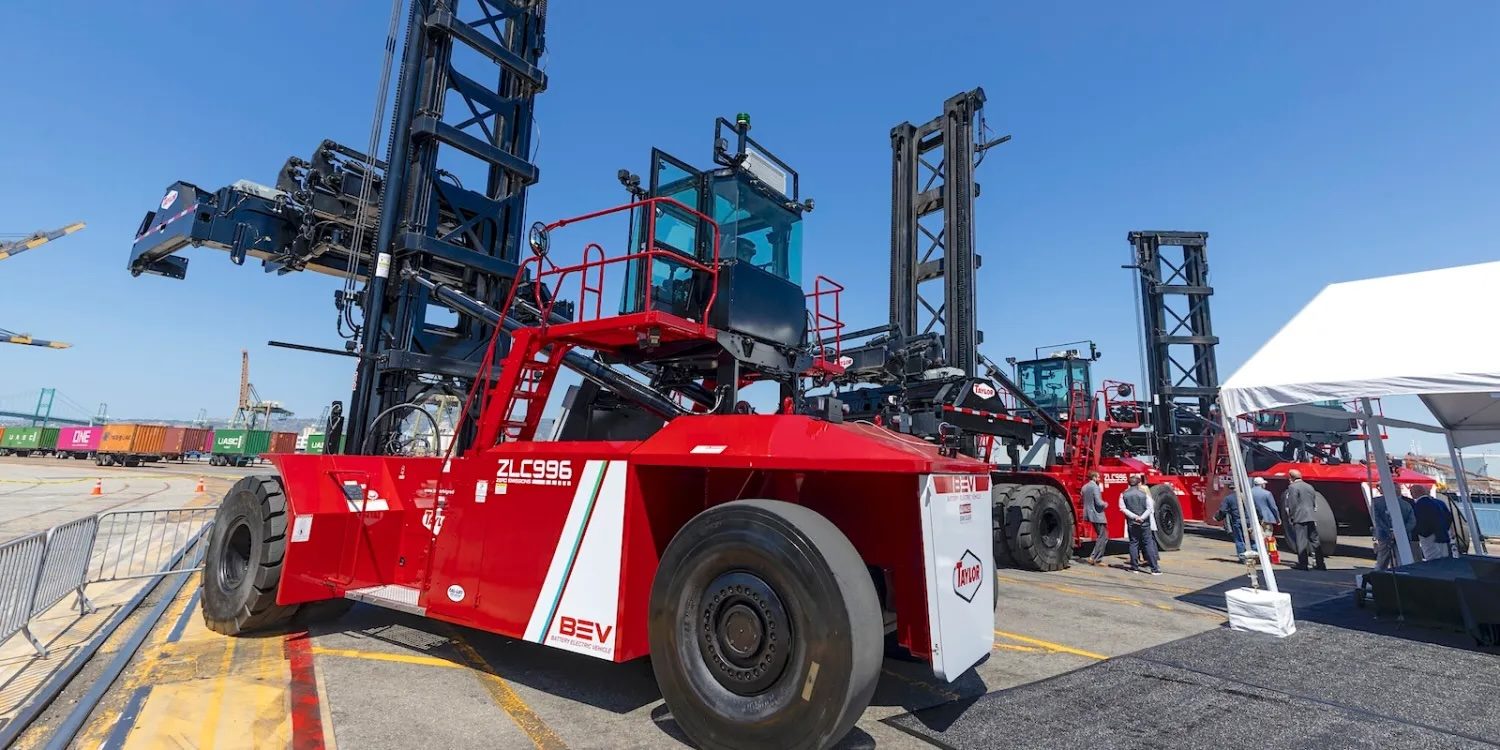
Port of Los Angeles commits $200 million to zero emission equipment:
The Port of Los Angeles has secured a new, 30-year lease with Yusen Terminals, with the marine terminal operator fully committed through 2056 in a deal that paves the way for an fresh, $200 million investment in zero-emission cargo-handling equipment. (!)
[Noice!]
Source: Electrek
Heard an interview with Bill Gates on an Atlantic podcast, he relies on a few years of programming he did when he was in his teens and twenties, yet he is the most prominent person who knows anything about programming. This is a societal mistake. We have to have public discourse about tech that’s as informed as Krugman is on economics, and Heather Cox Richardson is on American history.
[Absolutely. Most of the media conversations I hear are garbage. Years ago, reading magazines on topics of which I had first hand knowledge, I realized how many mistakes were made, how much misinformation was being disseminated. Anyway… more of the same.]
Source: Scripting News
‘Every Right on Red Frays the Social Contract a Little Further’:
Felix Kent, Defector (gift link):
Just about everything we do to make driving a car easier instead seems to make people complacent. The lanes on roads are wider than they need to be to account for lateral imperfection, and then there are wide berms so that someone may drive completely off the road in relative safety. Cars that are enormous, heavy, hulking things do not allow drivers to feel their weight because of myriad assistance features that make it possible to steer with a single finger.
But driving is a skill. Like any skill, it is something people will have varying degrees of success learning. Some people simply cannot drive, whether on a temporary or permanent basis. We can bet the farm on autonomous vehicles which, though seemingly capable in warm and dry urban settings, are an expensive and individualized answer that exacerbates all the other problems of car dependency. It is also a risky bet as, like any technology, current performance is not indicative of future gains. Public transit, on the other hand, is a proven technology that, among other things, strengthens the social contract while giving everyone the ability to move around a city.
[Could possibly be mitigated in part by changing the training, but the social contract in the US has never been more frayed… so let’s fix that first.]
Source: Pixel Envy
Nitter’s Developer Says X Sent a Cease and Desist:
“zedeus”:
On 24 August 2026 cease and desist letters have been sent by X Corp. demanding a permanent takedown of Nitter instances and the project’s repository.
Nitter mirrors X; it powers websites like XCancel which remains online and functional as of writing. (Update: A few hours after I published this, XCancel says it was also told by X to shut down its service.)
This is not surprising but it is very stupid. Companies like X and Meta are very happy to scrape the web at unprecedented scale and without permission, but have zero tolerance for the same to be done to them by, in effect, individual users. That is not because they are protective of the creative works users have contributed to these platforms. It is simply because users are not trusted to use the platforms. X does not permit third-party readers, and neither does Instagram, because their value does not come from us using these services as we wish, but from how they dictate we must. Bafflingly, however, some argue they should face little responsibility for those choices.
[I’m so tired of these companies and their “me first and only” leaders.]
Source: Pixel Envy
Acorn 8.6 Is Out, and Some Geeky Info on the New Brush Tool:
Acorn 8.6 is out!
The big new things are:
- A new brushing engine that has been rewritten using Metal shaders. It includes an option for “velocity thinning”, where the faster you draw your brush strokes, the thinner the lines.
- A new
acornshell tool that you can use to send JavaScript to Acorn, as well as start an MCP server. So if you’ve got a favorite LLM you like to use, you can now use it to drive Acorn. The JavaScript section of the release notes are a good read if you’re interested in that. In addition:
- The JS API has also been updated with examples for most calls.
- The shell tool has a
-jsioargument which lets you do things like:echo "acorn.takeLayeredScreenshot();" | acorn -jsio- Big ML models (used for Select Subject and Super Resolution Scaling) are now downloaded on demand. If AI isn’t your thing, they won’t take up any space on your Mac. If you do use those features, the models are downloaded once and cached, and future Acorn updates are faster because those models no longer ship with the app.
There’s more of course, including bug fixes and QOL things, which are covered in the release notes.
[Noice]
Source: News from Flying Meat
Apple today announced an all new lineup of Mac Mini (M6 and M5 Pro) and Mac Studio (M5 Max and M5 Ultra) desktops. The Apple Newsroom announcements for Mac Mini and Mac Studio only note base model prices. Here’s my attempt to put all of the RAM/SSD configurations into condensed tables, so you can see which storage and memory options are available for each chip, and how much they cost.
Notes
Ethernet: Across all Mac Mini models, upgrading from 2.5 gigabit to 10 gigabit is $100. On Mac Studio, 10 gigabit is standard on all models.
If you configure an M6 Mac Mini with 2 TB of storage, the SSD upgrade ($1,000) costs more than the entire base model computer ($900). So too with the 4 TB SSD upgrade for the M5 Pro Mini ($1,800 upgrade for a $1,700 computer).
Both Mac Mini and Mac Studio are available in a wide array of cool color choices, including silver.
It kind of stinks that there are no RAM options for the M5 Ultra Studio between the 96 GB base and the $4,000 256 GB upgrade. There “should be” a 128 GB tier, but if you squint you can see why they did it this way.
The best currently-available-to-order Mac Studio (36/80 cores, 256 GB RAM, 16 TB SSD) costs $18,300. But if you’re OK with the base 30/64-core chip and just 8 TB storage, you can cut the price to a smooth $13,000.
“Coming late October” = “Bend over”.
[Oy]
Source: Daring Fireball