Does Kenny G Make Good Music?

Does Kenny G Make Good Music? | The New Yorker:

Perhaps his most outspoken critic is the jazz guitarist Pat Metheny, who once referred to Gorelick’s work as “lame-ass, jive, pseudo bluesy, out-of-tune, noodling, wimped out, fucked up playing,” and described Gorelick’s version of Louis Armstrong’s “What a Wonderful World” as “a new low point in modern culture—something that we all should be totally embarrassed about—and afraid of.”

Regardless of what you think of Kenny G or Pat Metheny, I greatly appreciate an honest opinion. So much of the interactions I witness have pulled punches and unsaid truths because it won’t do to upset the apple cart. You don’t have to be mean or rude. But once you’ve lost the impact and core what you mean to say, you might as well say nothing…because that’s the end result. All your words wind up being meaningless. The above is not new, it happened years ago. But it was refreshing to run across it in what I thought was going to be a half a puff piece promoting the new film. Nice!

Knowledge beats recipes

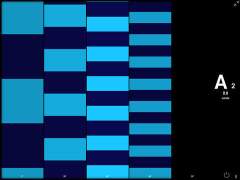
petersen strobosoft screen

Bear with me, this will take a bit of doing…

Quoting the Wikipedia:

The size of an interval between two notes may be measured by the ratio of their frequencies. When a musical instrument is tuned using a just intonation tuning system, the size of the main intervals can be expressed by small-integer ratios, such as 1:1 (unison), 2:1 (octave), 3:2 (perfect fifth), 4:3 (perfect fourth), 5:4 (major third), 6:5 (minor third). Intervals with small-integer ratios are often called just intervals, or pure intervals.

Most commonly, however, musical instruments are nowadays tuned using a different tuning system, called 12-tone equal temperament, in which the main intervals are typically perceived as consonant, but none is justly tuned and as consonant as a just interval, except for the unison (1:1) and octave (2:1). As a consequence, the size of most equal-tempered intervals cannot be expressed by small-integer ratios, although it is very close to the size of the corresponding just intervals. For instance, an equal-tempered fifth has a frequency ratio of 27/12:1, approximately equal to 1.498:1, or 2.997:2 (very close to 3:2).

[I quote simply to avoid all my musician friends from correcting me. Tough crowd.]

There are some instruments that can be played in a just intonated fashion (voice, violin) and many that cannot easily do so (piano, guitar.) The tradeoff in using an equal temperament system is that you can easily change keys which enabled all sorts of wondrous music. However the intervals aren’t pure, and before you dismiss the value of that… part of the excitement and wonder of a choir, string quartet, etc. is that they can change keys and yet sing pure intervals (or not) as they wish. Remarkable flexibility.

The wonderful little volume “Ratio” by Michael Ruhlman displays the ratios behind cooking. In the book one can learn that pasta dough is 3:2 ratio of flour and eggs. No wonder we all love pasta—it’s a perfect fifth of a food! Cookies are 3:2:1 (flour, fat, sugar). There’s little surprise that ratios are there to be found once you start digging into ratios and they’re place in the cosmos. And more importantly, they’re far more useful.

If you have grandma’s pasta recipe (I looked up one by Mario Batalli) you get something like this: 3 1/2 cups unbleached all-purpose flour, 4 extra-large eggs Now we can argue our way through whether this is represented by the ratio above, and how much it deviates, but my point here is if you memorize the ingredients and all the “use half the flour unless it’s not dough or too sticky stuff” you still will only be able to make that one recipe. But if you understand that the ratio of 3:2 makes a pasta dough then you have different starting point. You have *information* that you can use to create other variations… or explore the boundary between pasta and cookies etc. Same is true of music.

If you know how to hack your way through a song on a guitar and sing along that’s cool. But if you understand the intervals, the chord progressions and the meter, you have the tools that will allow you play 1000s of songs or make up your own.

One more example before I’m done torturing all this to a fare the well.

The lovely volume “By Hand & Eye” discusses ratio, although in this instance as it applies to furniture and proportion. As it says on the site…

…George R. Walker and Jim Tolpin show how much of the world is governed by simple proportions, noting how ratios such as 1:2; 3:5 and 4:5 were ubiquitous in the designs of pre-industrial artisans. And the tool that helps us explore this world, then as now, are dividers.

Something like a step stool is one handspan high by two handspans wide… or the same ratio as an octave, which at this point should be no surprise. And when you begin to pin the ratios together you can find them in the subdivisions of our hands and bodies, in the spiral of a nautilus shell, and in the fractal nature of so many things, where the thing up close repeats the pattern of something of greater distance.

And all of this leads us to the Fibonacci series, which is building block that we seek at eh foundation of so many ratio related conversations (which at least for me is a good enough source from which to crib.)

fibonacci_and_music

A piano keyboard makes this somewhat clear…

…scale of C to C above of 13 keys has 8 white keys and 5 black keys, split into groups of 3 and 2. While some might “note” that there are only 12 “notes” in the scale, if you don’t have a root and octave, a start and an end, you have no means of calculating the gradations in between, so this 13th note as the octave is essential to computing the frequencies of the other notes. The word “octave” comes from the Latin word for 8, referring to the eight tones of the complete musical scale, which in the key of C are C-D-E-F-G-A-B-C.

So look… I’m not telling you that your whole life should be constructed around Fibonacci, The Golden Ratio, etc. (although many things already are…). Or that the art of music, cooking, design, and creating in general might be in how and when you break or bend that cosmic sense of proportion. But it might well be the case.

The real point of all this is that recipes are for students. They are a constraint that you can embrace in order to begin producing results. Follow these drawings and you’ll create a reasonable staircase. This plan and you’ll produce reasonable tasting food. That sheet of music and maybe something Bach like will be heard, or maybe some ‘Stones or Coltrane.

But if you embrace the knowledge behind how how the universe orders itself engrained in all we use to create, you need only apply is a little bit of inspiration about where to bend the lines.

[I will no doubt be beaten about the head by one of the lovely folks who can reproduce, at will, a zillion different recipes and for whom, therefore, life is always easy. Artists always suffer.]

Jim Hall, Jazz Guitarist, Dies at 83

Jim Hall - Hiroyuki Ito for The New York Times

Jim Hall, Jazz Guitarist, Dies at 83 – NYTimes.com:

Jim Hall, a jazz guitarist who for more than 50 years was admired by critics, aficionados and especially his fellow musicians for his impeccable technique and the warmth and subtlety of his playing, died on Tuesday at his home in Greenwich Village. He was 83.

The list of important musicians with whom Mr. Hall worked was enough to earn him a place in jazz history. It includes the pianist Bill Evans, with whom he recorded two acclaimed duet albums, and the singer Ella Fitzgerald, as well as the saxophonists Sonny Rollins and Paul Desmond, the drummer Chico Hamilton and the bassist Ron Carter, his frequent partner in a duo.

But with his distinctive touch, his inviting sound and his finely developed sense of melody, Mr. Hall made it clear early in his career that he was an important musician in his own right.

He was an influential one as well. Pat Metheny, Bill Frisell and John Scofield are among the numerous younger guitarists who acknowledge him as an inspiration. Mr. Hall, who never stopped being open to new ideas and new challenges, worked at various times with all three.

[Looking at the list of musicians mentioned here, it as impossible to ignore Jim Hall as an influence while taking Jazz and guitar playing seriously 30+ years ago. He was incredibly melodic, musical, and minimalist and remains refreshing to listen to all the time. Sure Pat, Bill, Sco, Mike and others were great influences, but they all pointed back to other players, especially non-guitarists. but one guitar player they all mentioned was Jim Hall. Finest Kind.]

Getting kicks at 66

Getting kicks at 66:

Funny, a few months back my 16-year old son asked what the point of “range” was with radio. He’s a digital native who is used to being zero distance from everybody else on the Net, including every broadcaster.

[I grapple with this all the time, as even my 8 year old has a different reality about music and video.]

Meanwhile here I am with a giant pile of trivia in my brain about how AM and FM broadcasting works. It’s like knowing about steam engines.

[I know a lot about various steam engines as well… sigh. At least the development world keeps me honest about the newer stuff.]

But mostly I keep living in the future. That’s why I’m jazzed that both VRM and personal cloud development is rocking away, in many places. Following developments took me on three trips to Europe in May and June, plus two to California and one to New Zealand and Australia. Lots of great stuff going on. It’s beyond awesome to have the opportunity to help move so much good stuff forward.

Speaking of distance, the metaphor I like best, for the birthday at hand, is “(Get Your Kicks on) Route 66.” Composed in the ’40s by Bobby Troup, the jazz composer and actor, it has been covered by approximately everybody in the years since. The Nelson Riddle sound track for the TV show Route 66 was evocative in the extreme: one of the best road tunes ever written and performed. In addition to that one I have ten other versions:

  • Erich Kunzel
  • John Mayer
  • Chuck Berry
  • Nat King Cole
  • The Cramps
  • The Surfaris
  • Oscar Peterson & Manhattan Transfer
  • Andrews Sisters and Bing Crosby
  • Manhattan Transfer
  • Asleep at the Wheel

My faves are the last two. I’ll also put in a vote for Danny Gatton‘s Cruisin’ Deuces, which runs Nelson Riddle’s beat and muted trumpet through a rockabilly template of Danny’s own, and just kicks it.

Anyway, my birthday is happy, so far. Thanks for all the good wishes coming in.

[Because any blog post that mentions Radio, Route 66, *and* Danny Gatton is a sure winner. Bless you Doc! Many happy returns.]

Source: Doc Searls Weblog

Gionvanni Grancino violin has been lost and presumed stolen

A Gionvanni Grancino violin has been lost and presumed stolen in
Amsterdam, The Netherlands, on Friday, March 29th 2013.

European luthiers and the Interpol have already been informed and are on
the look out for it, but they would now would like to get the word out in
the US as well as a precaution, as the violin still has not been recovered.

The instrument belongs to the Jumpstart Jr. Foundation, based in the
Netherlands.

Jumpstart Jr. was founded in The Netherlands in 2006 and is the custodian of a unique collection of historical string instruments crafted by old masters and selected by leading baroque players. Jumpstart Jr. aims to identify the best young players who have already completed a musical education and are recognized to become leading performers.

I can pass on the email addresses and phone numbers of those involved.

Galerie 50 11 m

Pandora and Artist Payments

Pandora and Artist Payments:

Pandora founder Tim Westergren:

For over two thousand artists Pandora will pay over $10,000
dollars each over the next 12 months (including one of my
favorites, the late jazz pianist Oscar Peterson), and for more
than 800 we’ll pay over $50,000, more than the income of the
average American household. For top earners like Coldplay, Adele,
Wiz Khalifa, Jason Aldean and others Pandora is already paying
over $1 million each. Drake and Lil Wayne are fast approaching a
$3 million annual rate each.

It’s hard to look at these numbers and not see that internet radio
presents an incredible opportunity to build a better future for
artists. Not only is it bringing tens of millions of listeners
back to music, across hundreds of genres, but it is also enabling
musicians to earn a living. Since Pandora accounts for just 6.53%
of all radio listening in the U.S., it seems fundamentally unfair
that other forms of radio that represent much larger shares of
U.S. radio listening pay substantially less to artists.

Hard to argue with that.

[I point to all the anti “new model” articles. Seemed like this ought to get some play as well.]

Source: Daring Fireball

In defence of music

In defence of music:

And so I am here in defence of music. Of music music—not social music sites, not music apps, not the ability to stream, or the ability to store songs in the cloud. I am here to extol the delicious, indescribable good that music can be to our ears, our psyches, our souls. I am here in particular to extol the marvelousness of recorded music, for its ability to be with us where we are, to soothe us and stir us and remind us, in ways both ineffable and unmistakable, of nothing less than the majesty of life itself.

[Not a perfect piece, but they’ve got a point.]

A Killer, Sustainable, Industry Saving Music Service Is Possible – hypebot

A Killer, Sustainable, Industry Saving Music Service Is Possible – hypebot:

You would be amazed what you can build with $10 million dollars in funding when you don’t have to give $8 million of it to the major labels in advances. Spotify, Pandora and countless other services could have, long ago, built tons of these features and value-driving tools if their money wasn’t first poured into the labels, and then their focus placed on scraping by a meager living creating minimal value for car manufacturers and fast food joints.

[It’s all messed up. Kinda like the social networks. The model is simply wrong.]

Shep on Bass – Blog – Interview: Janek Gwizdala

Shep on Bass – Blog – Interview: Janek Gwizdala:

“Well what I’m going for, before you get anything in the signal chain, is control over my sound with my fingers. No EQ on either the amp or the bass, just a range of sonic motion using the wood, the strings, and my hands. Sometimes I’m successful, sometimes not, but that’s the concept at least.

[Amen. Still teaching students this for 30+ years of electric guitar playing. Sound via fingers… all else will follow.]