The danger in relying on *sophisticated virtual design tools*

QUOTE: The danger in relying on [sophisticated virtual design tools] too much is that we can end up isolated from the physical world. In our quest to quickly make three-dimensional objects, we can miss out on the experience of making something that helps give us our first understandings of form and material, of the way a material behaves—’I press too hard here, and it breaks here’ and so on…It’s very hard to learn about materials academically, by reading about them or watching videos about them; the only way you truly understand a material is by making things with it.

Jonathan Ive, Apple’s Senior Vice President of Design, discussing materials and the iPhone 4

[I mentioned this before. Living only in a digital, virtual world lacks balance and doesn’t engage senses that we’ve developed over lifetimes.]

Source: SIGNAL VS. NOISE

Laver’s Law of Fashion

Good stuff…

Laver’s Law of Fashion: James Laver was a museum curator for the Victoria and Albert Museum in London from the ‘30s through the ‘50s. He was also a fashion theorist and historian who conceived Laver’s Law — an attempt to make sense of the fashion trend lifecycle.

Here is Laver’s Law:

Indecent 10 years before its time
Shameless 5 years before its time
Outré (Daring) 1 year before its time
Smart Current Fashion
Dowdy 1 year after its time
Hideous 10 years after its time
Ridiculous 20 years after its time
Amusing 30 years after its time
Quaint 50 years after its time
Charming 70 years after its time
Romantic 100 years after its time
Beautiful 150 years after its time

Stanley Marcus, the former president of Neiman Marcus, recounts in his memoir Minding the Store how Laver’s Law was used by Neiman Marcus clothes buyers in the late 60’s. There was a heated internal debate on whether the trend for that next year would still be the mini skirt (which was the current fashion) or the longer midi skirt. Marcus asked Laver point blank if the mini skirt was dead. Laver told him that the mini skirt had at least another 2 years to go — against expert opinion at the time.

His forecast was right, the midi was a complete flop, many women continued to wear the miniskirt, and those who couldn’t or wouldn’t make up their minds went into the pants suit. Pants were bound to come, but the skirt-length controversy made pants acceptable at an accelerated rate.

The brilliance of this timeline is that it can be applied to nearly all creative mediums — not just fashion but also art, design, architecture, and even music. Smart, or Current Fashion, doesn’t have a particular time frame attached to it. Something can be smart for 1 year or a even few years.

Think back to some of the trendy things of the past and you’ll see how it applies: candy colored iMacs, Victorian wallpaper, Emigre fonts, Disco, Sears homes of the 1920’s, Preppy clothes, Atari video game box covers, and Braun products of the late-50’s early 60’s.

Hitting that sweet spot around Daring and Smart when you’re trying to design, create or sell something is crucial. There’s even a market for Dowdy too, right? Just look around at your local mall or shopping center. Just remember that in a few years it’ll start to look bad. In 10 years it’ll look REALLY bad. Then, after some time, it will be appreciated — or even revered — again. I take comfort that something like Comic Sans (theoretically) will have a shot at being beautiful in 100 years time.

[Consider what doesn’t fit this concept. I’m curious for counter examples.]
Source: SIGNAL VS. NOISE

What the iPad changed

Not that long a go a “workstation” implied an integrated effort. Hardware and Operating System engineered by the same company which ensured a more seamless experience. There have been many companies that have produced these integrated efforts including Sun and Apple.

Certainly the out of box experience of Lisa’s iMac was exceptional The unit was unboxed. The power cord was attached to the back and the wall. The power button was pushed. The computer suggested putting the batteries in to the wireless mouse and keyboard and connected them to the system when that was complete, and a few clicks later Lisa was ready to get to work. One wire. If only Shipstone existed outside of Heinlein books.

That experience, as great as it is diminishes over time. Why? Because after all that is over, it’s still a computer. You have apps to install, files in a file system, bookmarks in multiple browsers etc. Essentially, all the baggage of computing that has accrued over the last 25 years or so.

The iPad is yet another step along the path of washing all that away. Many of us are used to a near continuous connection to the nets. Many of us have storage “in the cloud” that makes our work available where ever, whenever. The IPad hides the OS, it hides the file system, it hides the computer. It make software as much of an appliance as the hardware has become. It seems, while you use it, do only do one thing. As if at that moment it’s nothing more than a email device. Or a “todo” list. Or a spreadsheet.

Once again it’s about simplicity. It’s about making choices as a designer, having an opinion about what’s needed, for whom and when. Will it be all things to all people? Of course, not. But it could well be a device for many people for much of the time. And easier and more convenient to use than a laptop or desktop computer. We’ll see.

hero_20100127.jpg

This year’s favorite things

In the tech category, Rails 2.3, Redis, and the Engine Yard Cloud. offerings have got to top the list of things that improved our ability to deliver products and simplified solutions for us. Github also tops my list of services that have become a way of life. The tech world spins quickly though. Curious to see what’s next. In all cases though, it’s not the tech or the code but the people. All these projects or companies have seriously dedicated people working on them. *That* is what makes these things go. Rock on people.

Quoc Pham fixed shoes
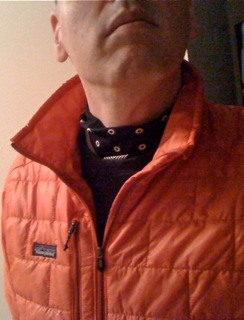
Rapha scarf, Patagonia Nano Puff Pullover
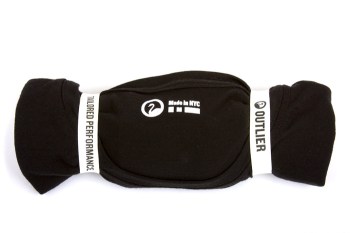
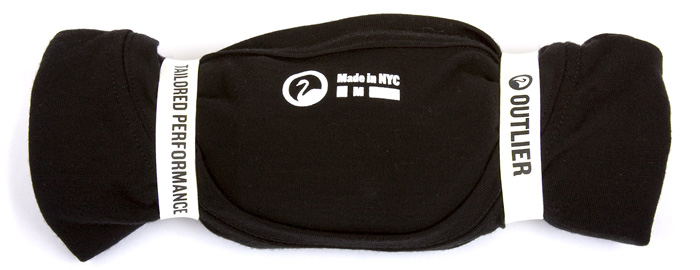
Outlier Black Empire Tee
Stormy Kromer shirt
Rapha Lightweight Softshell
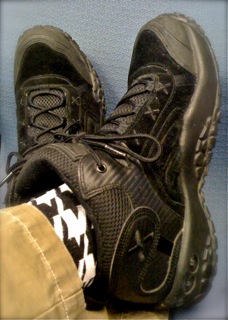
Panache Cycling Houndtooth socks
Outlier hoodie
dogfishhead 90 minute IPA
jeff jones silver headbadge
hed ardennes
king cages ti water bottle cages
harriman local loop
Chris King ISO Hubs
Starting line with Team Fatty at the Livestrong Challenge Philly
Fall riding rocks
Mad Alchemy Mango Love
Taza Chocolate Mexicana helping the dev team persevere
Laying down some fresh tracks in the snow

There might be a few more… time will tell.

Outlier Tailored Performance (The Houndstooth Chronicles)

Outlier-winterhoodie-flat.jpg

I’m not sure where I came across Outlier, but I thought it was cool that couple guys in Brooklyn, were creating clothes for the tween space between on bike and off. It’s hard to make things work in both environments, it takes serious effort. I also dug that they were having the clothes made in NYC. I have some family connection to the “Shmata” trade, and I’m all for local sourcing and direct trade.

Occasionally they experiment with stuff publicly and make a few of an item. I think the first piece I grabbed was the Workwear Hoodie. The durable Workwear fabric ( Schoeller Dry Skin Extreme + Nanosphere) has worn extremely well. I haven’t taken any spills in it (thankfully) but it puts up with everything my rambuctious 4 year old can throw at it… Cookie and cracker crumbs, water, chocolate, miscellaneous dirt from goodness knows where have all rolled off. The fabric exterior is a canvas like nylon, and the inside a softish fleece that is warm and comfortable against the skin. It dries fast too, although it takes a lot to get it wet. The cut is clean and a bit smaller than is generally found in American brands. If you want to wear it with sweaters underneath order up. I find myself wearing this piece a lot as a spring/autumn jacket, and a layer through the winter. The helmet sized hood makes it a great piece to pair with a hoodless jacket. The Patagonia Nano Puff I recently started to wear leaps to mind. Awesome stuff.

outlier-nail-ltblue-profile.jpg

The next couple of pieces I ordered together. The Nailhead Cap and the Empire Merino Tee. I’ll go ahead and quote directly: “Nailhead is one of our favorite worsted wools around. Its subtle pinprick pattern gives it an incredible depth of texture, and as a fine suiting fabric it tends to be made from the softest and longest wool fibers available. That makes it one of the best performance fabrics in the world, but you’d never know since it tends to be used in expensive men’s suits and nothing but.” I can tell you that the cap is comfy, looks good whether I’m dressed down (as I usually am) in jeans and a sweater, or dressed up in a long wool coat. I’ve worn it every day since I got it. As with almost all hats, I could use a version where the crown to ear depth is shorter… but it’s close, close.

IMG_1285.JPG

I added the Empire T because Merino is darn comfortable. I love all the clothes I have that use this wonderful stuff, and the execution here is spot on. Yeah, in the end it’s an expensive T-Shirt, but it is one that you can wear as a base layer, or not. It’ll keep you cool and warm. It’ll do all that even if it gets wet… and it *doesn’t* become as odiferous as new fangled technical materials seem to. Wool is the original, and as far as I’m concerned most super, fabric. Properly chosen and tailored it’s perfect whether in a favorite houndstooth lightweight pant, a Filson Mackinaw jacket, or this excellent shirt. I only wish I could afford a passle of them.

I’d love to try some of the pants they’ve made, but I really need to try on pants since I have short legs, and prefer a short rise, especially on the bike. Maybe if I beg, Abe & Tyler will send me some…

Anyway, go check out there stuff. Designed and manufactured here in New York City with amazing fabric and materials. While they put out a “hipster” vibe, it’s not required. The designs are flexible enough to apply to us plain ole’ workin’ dads and our bikes.

OUTLIER-Empire-Tee.jpg

Stormy Kromer and Twin Six (It’s not all about houndstooth)

IMG_0327.jpg

Some mornings require Stormy Kromer. The pics don’t tell the quality story. They started out as a cap company because ‘ol Stormy got tired of his hats flyin’ away. The best products always seem to start this way. As usual, picked up on clearance. I’m not avant when it comes to clothes. Matched today with the “Bat Out Of Hell T” from Twin Six, which sadly you can’t get. (A limited edition). You can’t really see it in the product shot, but it’s leaves beneath the bicycles wheels that turn into bats. a beautiful touch. Yeah, I look like autumn today, but then it was 37F when I walked out the door this morning…can you blame me? I thought not.

t609t39_lg.jpgstormy_kromer.png

Five Ten Impacts and Piloti (The Footwear Chronicles cont.)

IMG_0300.jpg

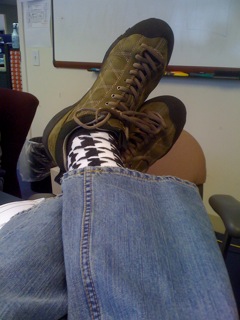
Comfy sneaks with lots of grip. Keeps my ankles protected for those times when I begin to believe I can huck a bike off of anything, or when I just stumble over myself. Picked them up on clearance a couple years back and have no regrets. Looking particularly hip in this case with the Panache Cycling houndtooth socks.

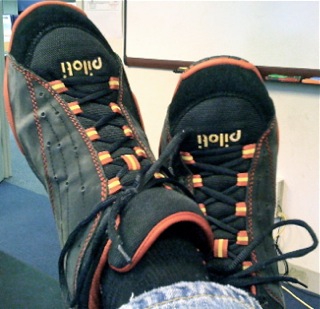
Next up are my Piloti shoes. they don’t seem to make this model anymore, which explains why they were also on clearance. About three years into the wearing, they’re great shoes for a Sunday, or end of the week commute because they’re designed for driving, and work reasonably well on a bike (A stiffer sole would help on the bike, but would probably lose some of the sensitivity that makes them work so well when driving). The round heel cup and extended edging make for comfortable driving, even if you get into a bit of heel and toe work, but there’s enough cush to make errands, shopping, and other weekend activities a pleasure.

Don’t be fooled, Piloti makes serious race shoes if you’re part of the horsepower set, and they’re well made touring shoes look is well designed for the Concours folks. But I find that for a day in and out of the car, or longer trips they’re an excellent choice. The fit and finish on these is excellent and the more luxurious versions can easily hide in an office where no one will know that in your head you’re taking the off camber on your favorite twisty mountain road.

On this day, they’re paired with Rapha merino wool socks (the black with the pink accent.) Nice.

IMG_0321.jpg

rapha.png

Weaving and patterns courtesy of Turnbull & Asser

Too many questions yesterday… so for those who asked questions better asked of the interwebs and someone who knows something…I filched expertise from Turnbull & Asser:

Warp and Weft: All weaves are made up from Warp and Weft ‘yarns’. Warp ‘yarns’ run along the length of the material, whilst weft ‘yarns’ run across the width of the material. It is the different methods of interlacing the warp and weft ‘yarns’ that create a particular type of weave. Many of the most common weaves have acquired names that come down to us over the centuries.

Brief Glossary of Weaving Terms

  • Float: A float is created when a warp or weft ‘yarn’ is passed over two or more threads.
  • Shed: A shed is the opening created on a loom where the weft passes between the warp ‘yarn’.
  • Pick: A pick (also referred to as a shot) is a single pass of the weft through the ‘shed’.
  • Ends: Individual warp threads.
  • Yarn: Yarn is the generic term for a thin, long, continuous strand of textile fibre, filament, or material in a form suitable for knitting, weaving, or otherwise intertwining (or interlacing) to form a textile fabric.

Plain weave is the most common and the tightest method of interlacing warp and weft. Each warp ‘yarn’ passes alternately over and under each weft. The interlacing is opposite in all neighbouring cells. Plain weave allows the highest possible number of interlacings which, depending on the fibre and ‘yarn’ type, the thread density and the finishing, can yield fabrics with high abrasion resistance and resistance to ‘yarn’ slippage.

Lace weave is formed using a combination of ‘floats’ created on a plain weave such that the illusion of small openings is created thus mimicking the appearance of lace.

In twill weave the order of interlacing causes diagonal lines to appear in the fabric. The lines may run to the right, known as the Z direction, or they may run to the left, known as the S direction. On the reverse of the fabric the twill lines run in the opposite direction and are often less distinct. The twill effect can be accentuated by using different coloured warp and weft ‘yarns’.

Warp-faced twills show a predominance of warp ‘yarns’ on the face whereas Weft-faced twills (sometimes called twillette) show a predominance of weft ‘yarns’ on the face.

Grenadine dates back to at least the 18th century when it was used for black silk lace scarves. It was once a popular dress fabric and takes the form of a fine leno-weave mesh. The leno weave is a locking type weave in which two or more warp threads cross over each other and interlace with one or more weft (filling) threads. It is used primarily to prevent shifting of fibres in open weave fabrics. Fabrics in leno weave are normally used in conjunction with other weave styles because if used alone their openness could not produce an effective composite component. The primary characteristics of Grenadine are that it has an open-weave effect, a low yarn count, good dimensional stability and lesser yarn slippage.

The appearance of herringbone weave is exactly as its name implies, namely the shape of the skeletal remains of a Herring. This fishbone effect is created by reversing the direction of the twill weave at regular intervals; this causes the diagonal lines to reverse in direction.

The Houndstooth check pattern originated in woven wool cloth of the Scottish Lowlands, but is now used in many other materials. The traditional Houndstooth check is made with alternating bands of four light threads in both warp and weft woven in a simple 2-2 twill, two over – two under the warp, advancing one thread each pass. The result of this broken twill weave is what can best be described as a four-pointed star check design.

The word moiré comes from the French word for “watered”. In English, it originally referred to the shimmering quality of the French moiré silk. A moiré pattern occurs when two or more different geometrically regular patterns are superimposed. A classic moiré pattern is composed of two sets of parallel lines that are at a slight angle. You can see this effect in real life if you go past two fences located one behind another. A moiré pattern does not necessarily have to be composed of lines. It can also be composed of circles, dots or any other repetitive pattern, consist of multiple colours, and be either moving or still. The essential quality of a moiré pattern is that a new pattern emerged from two existing ones. Often the new pattern seems to resonate or implies a depth not seen in the patterns individually.

A Repp weave is usually applied to a heavy or medium fabric and produces prominent and pronounced ribs (or ridges) in the finished cloth. A true Repp, which is no longer commonly made, is a plain weave fabric made with two warps, one fine and one coarse, the yarns arranged alternately and the fine warp more heavily tensioned than the coarse. Two wefts are used, one fine, one coarse alternately and the weave arranged so that the coarse warp is always lifted over the coarse weft. This creates very prominent ribs. More usually the term repp is given to almost every fabric of the plain weave type having prominent ribs, made on the plain weave fine warp and thicker weft principle and of a coarser and heavier construction than faille and poult.

A rib fabric is one where the surface shows raised lines or ridges. In a warp rib the ridge runs across the width of the fabric and is achieved with a high density of warp ‘ends’, where two or more weft ‘picks’ are placed in each ‘shed’. The warp ‘yarn’ is often finer than the weft and covers the surface of the fabric. A weft rib is the converse of a warp rib where the rib effect runs along the length of the fabric.

Satin is a weave and not a material. The description ‘Satin Bow Tie’ is in truth not the full description as many satin bow ties are made from Cotton rather than Silk.

The main feature of satin weaves is the uniform distribution of the interlacings, which are never adjacent to one another. A basic satin weave repeats over at least five ‘ends’ and five ‘picks’, but the warp ‘ends’ interlace only once. This type of weave pattern leads to the creation of long ‘floats’ which because of the scarcity of interlacings (and thread density) in turn produce the smooth, even and lustrous sheen often associated with satin.

English in origin and was originally created for use in mourning cloth. Barathea generally uses a worsted ‘yarn’ woven with a twill hopsack or broken rib weave. The resulting cloth has a fine texture with a slightly pebbled effect and faint regular twill lines running in opposite directions. Barathea, which has a matt finish, is used in many forms of formal wear including bow ties and cummerbunds.

Self-on-self, also known as Self Figure, is not a particular style of weave; rather it is a generic term for any weave that creates a pattern within the cloth where the weave of the design differs from the ground weave. Self-on-Self is generally employed on plain colours (most commonly white-on-white), the pattern being the same colour as the ground.

End-on-end (also known by its French name, Fil-a-Fil) is essentially a plain weave where one colour yarn is interwoven with another colour yarn. Although one of the two colours is usually White, a great variety of end-on-ends have been produced in recent years. This type of weave yields a familiar two-tone appearance. For end-on-end cloths that do not incorporate a white yarn then one of the yarn colours tends to be a darker shade of the same colour. For example Sky Blue might be used for the ‘weft’ yarn and Mid Blue for the ‘warp’ yarn.

Houndstooth rules!

It isn’t often that I take a stand on things which culture and taste make clear to some and not to others. But this shot from lunch at work today, expresses the obvious… Houndstooth rules! (As does green tea from Adagio with their brilliantly simple ingenuiTEA, and a warm, bright final day of summer.)

IMG_0245_2.jpg

Other sources of houndstooth finery can be found at Panache Cyclewear (I have the socks, but more to come, hopefully, next season) and more generically, here.

Proud of your Houndstooth? Let me know (No one has more fun than I)